
Last updated September 10, 2026
Level 1 sweep and inspection to the NFPA 211 annual standard - flue, crown, cap, and flashing checked and photographed
Chimney sweep logs do not sweep chimneys. They loosen some creosote - which then falls where a brush and vacuum still have to collect it.
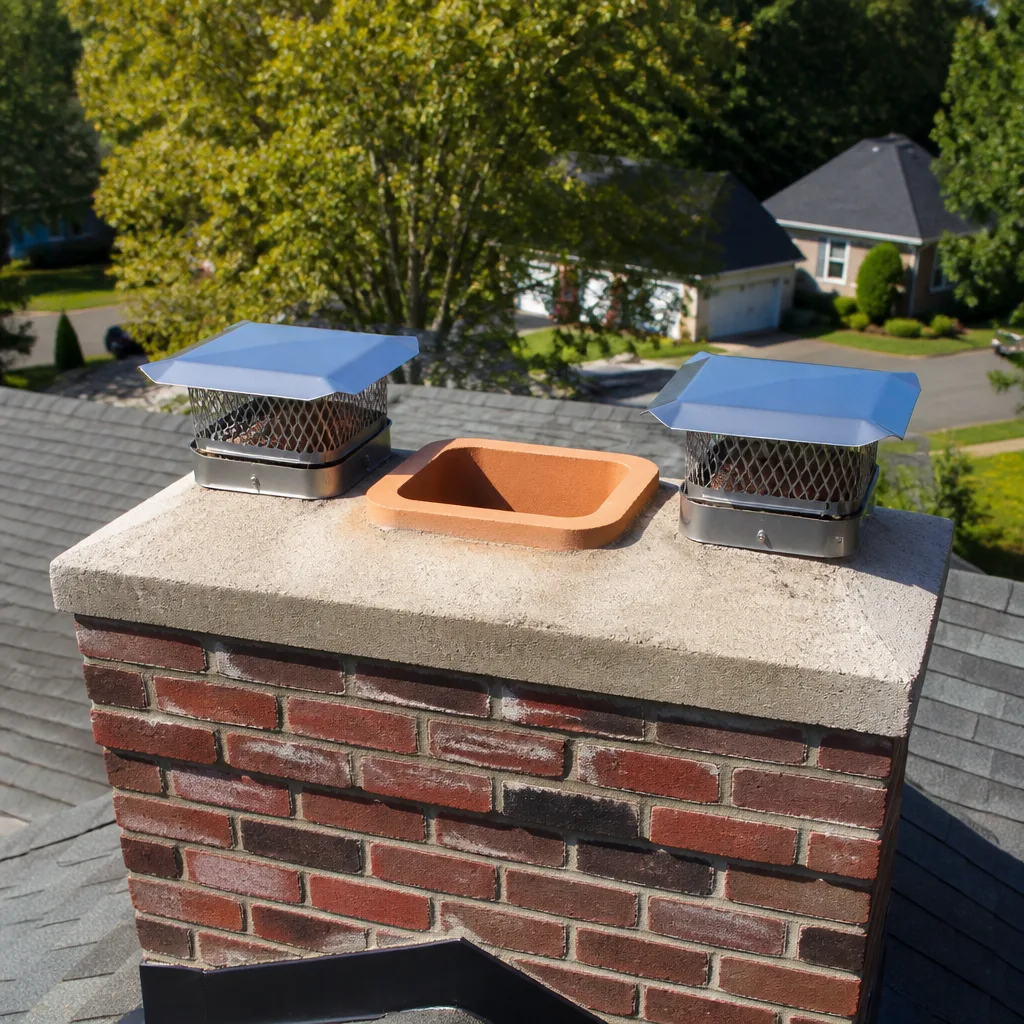
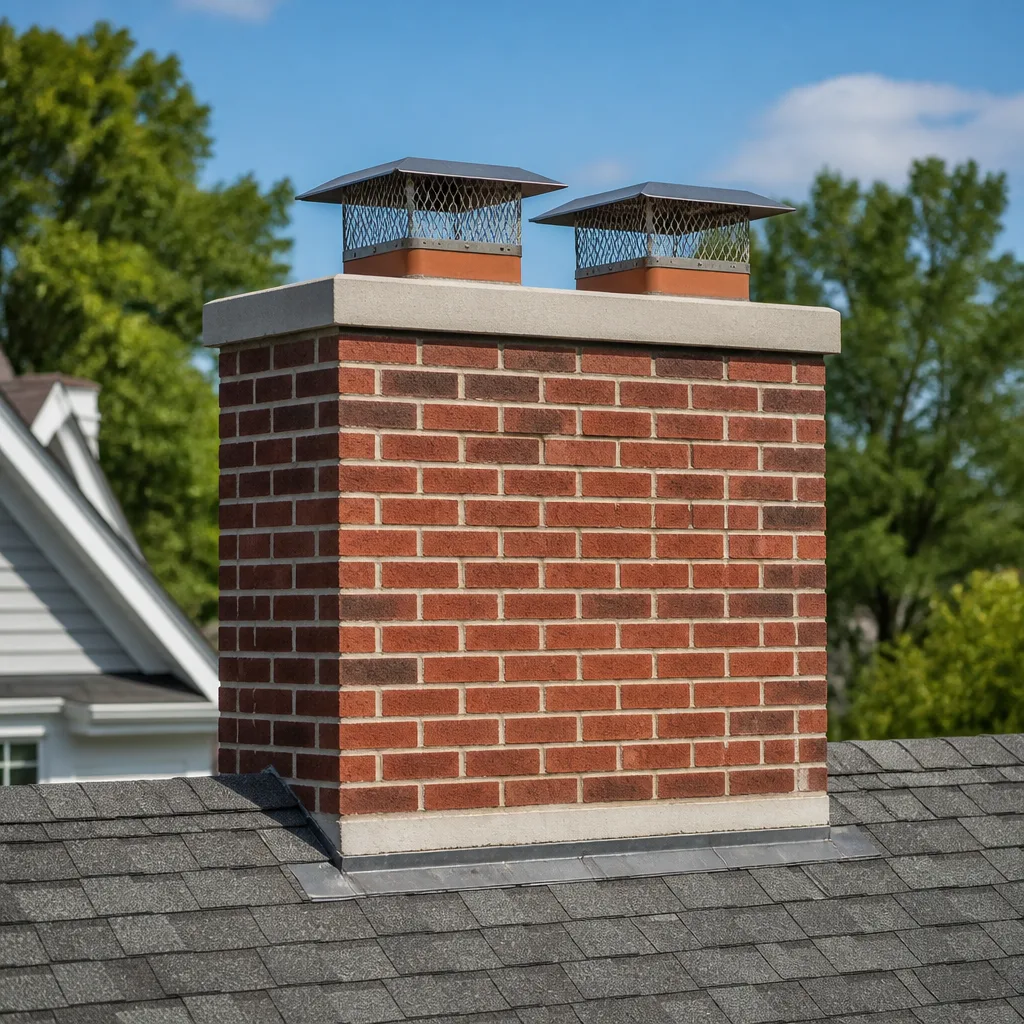
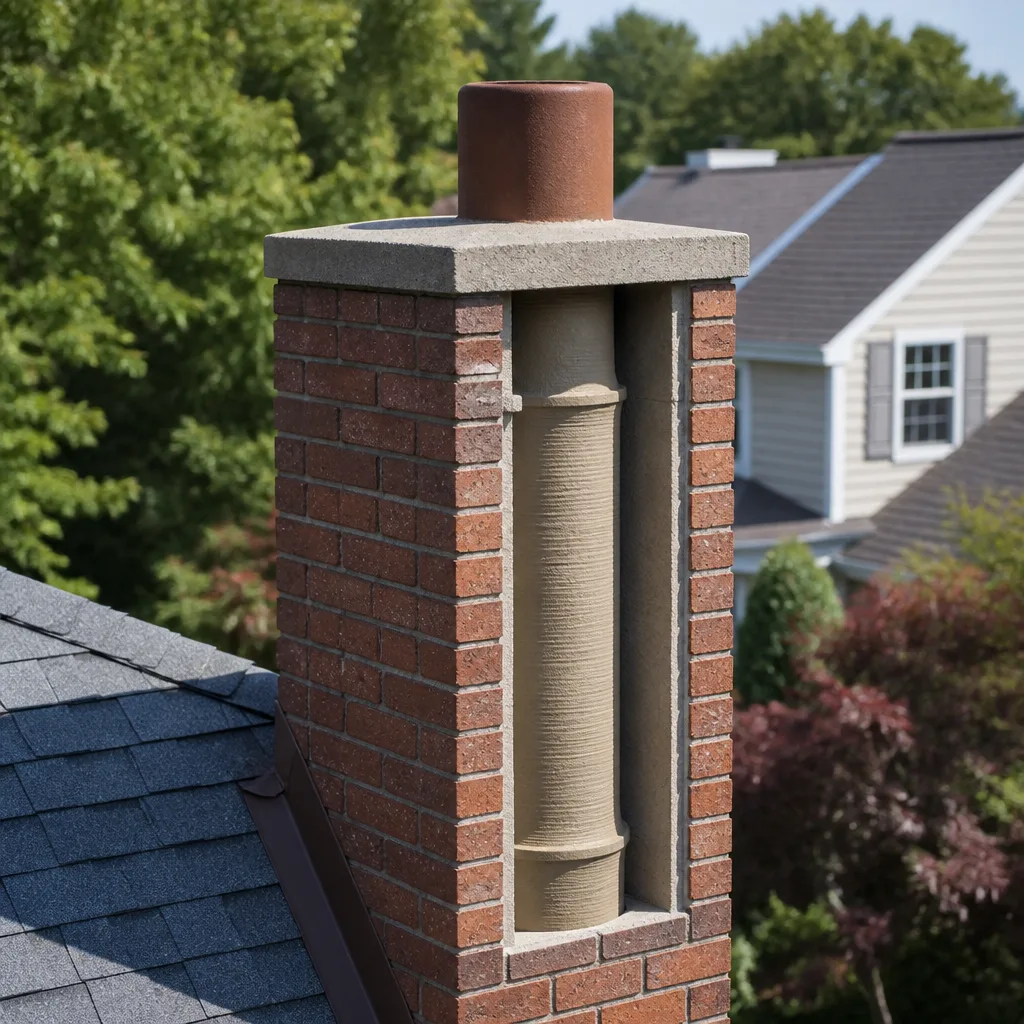
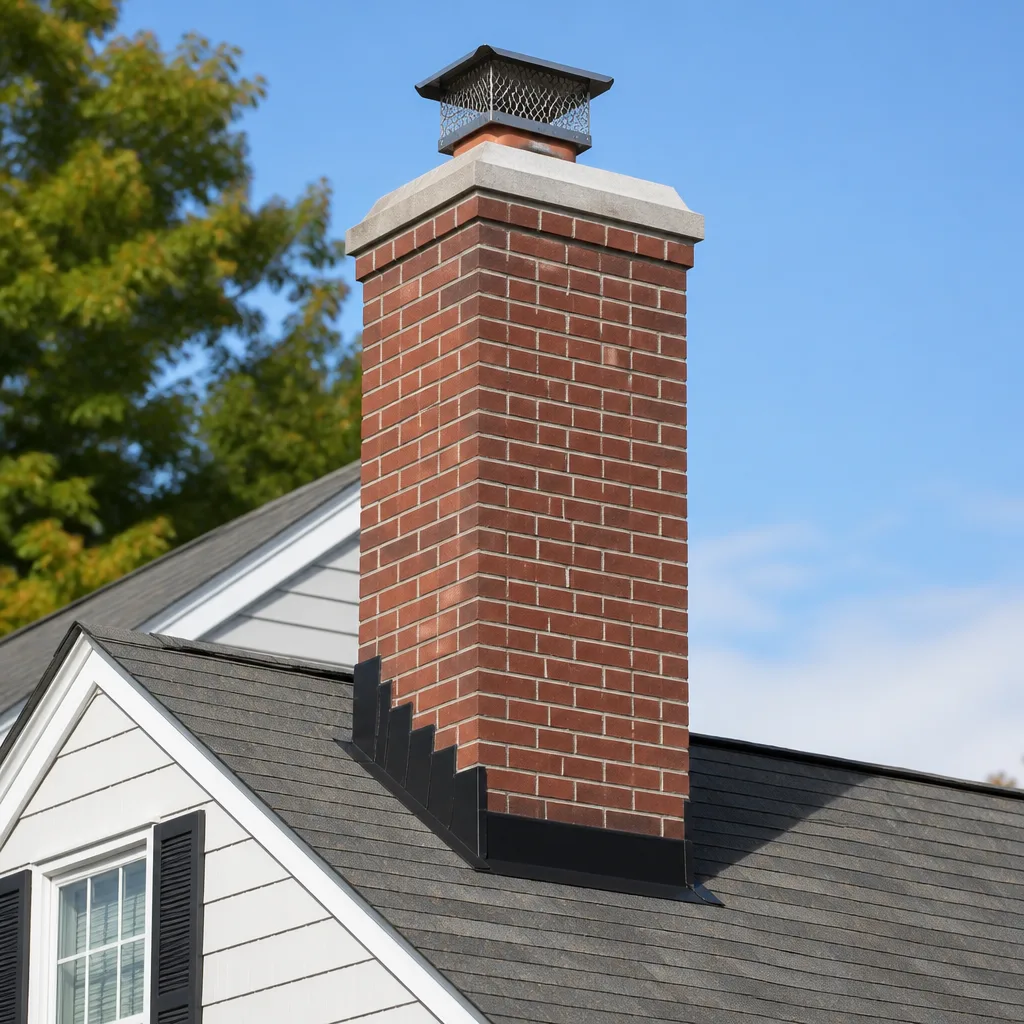
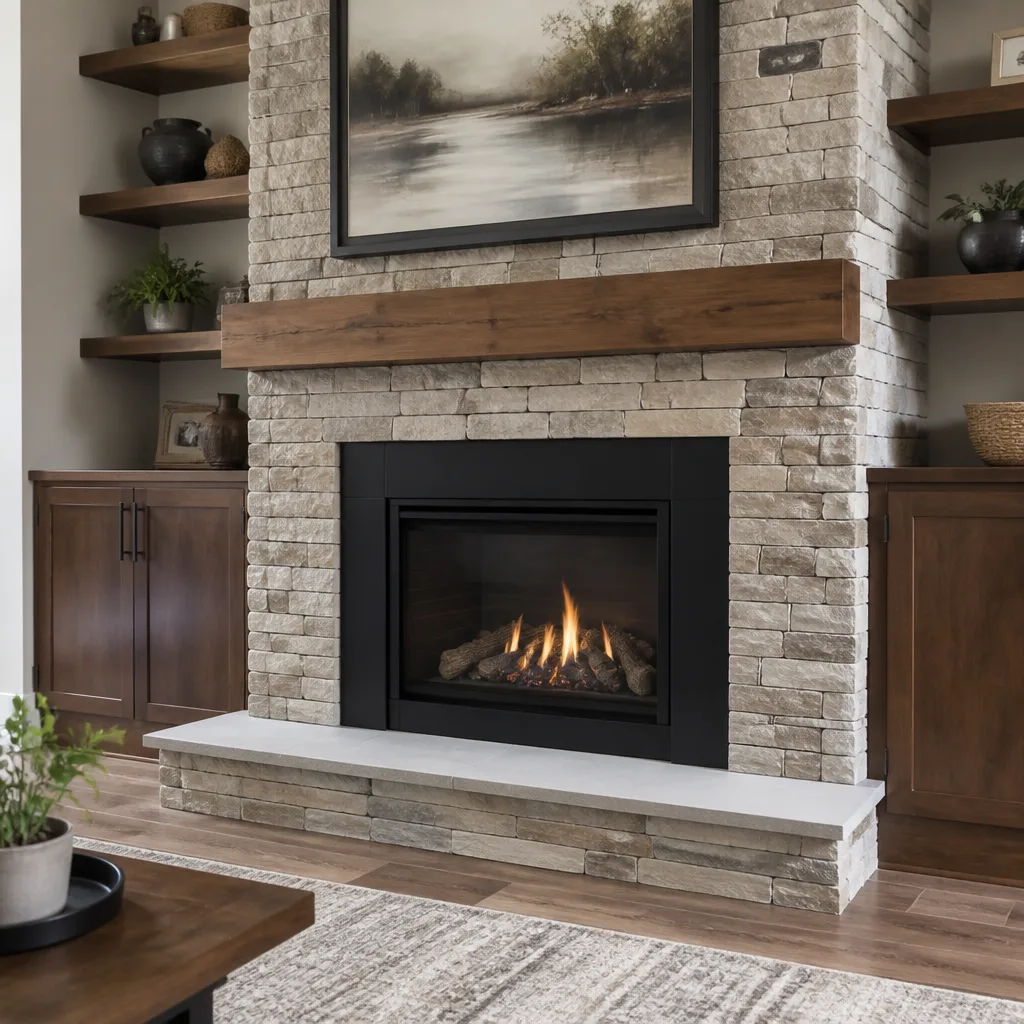
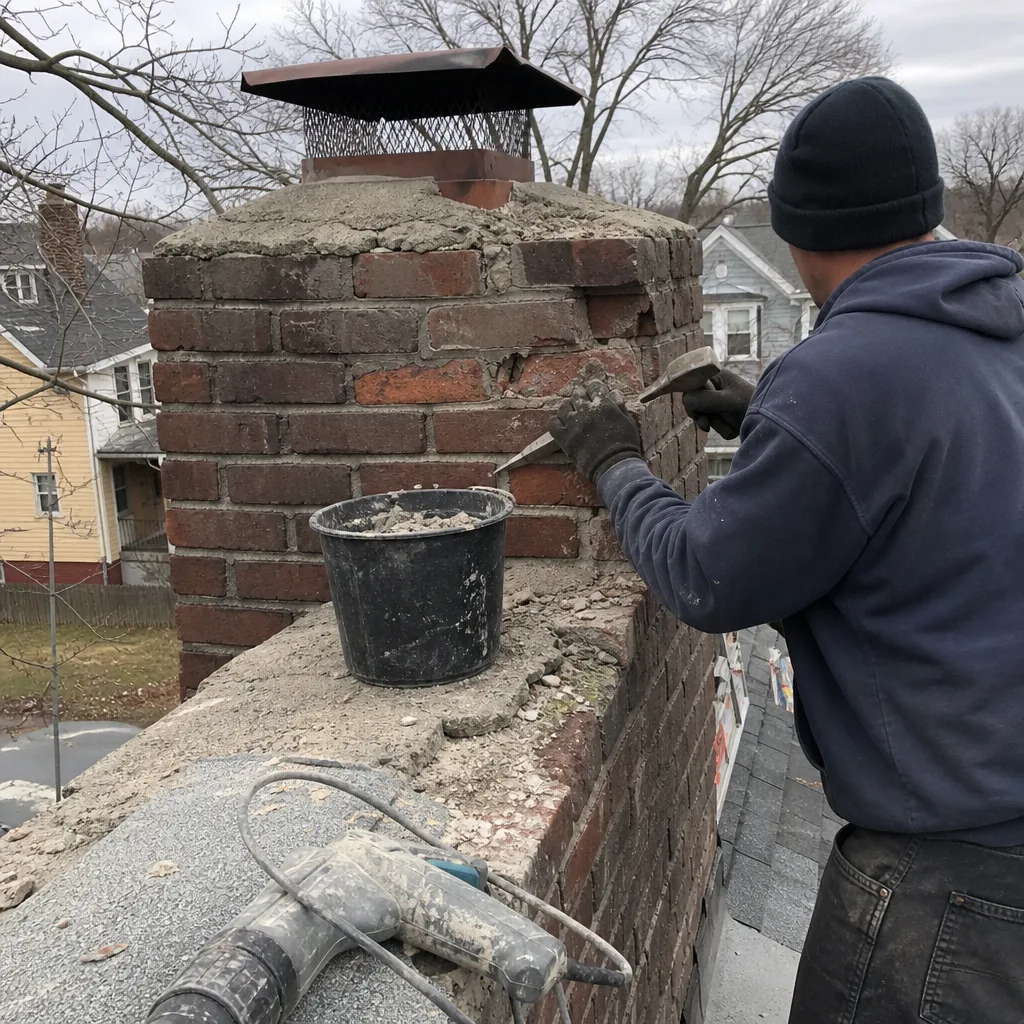 Before
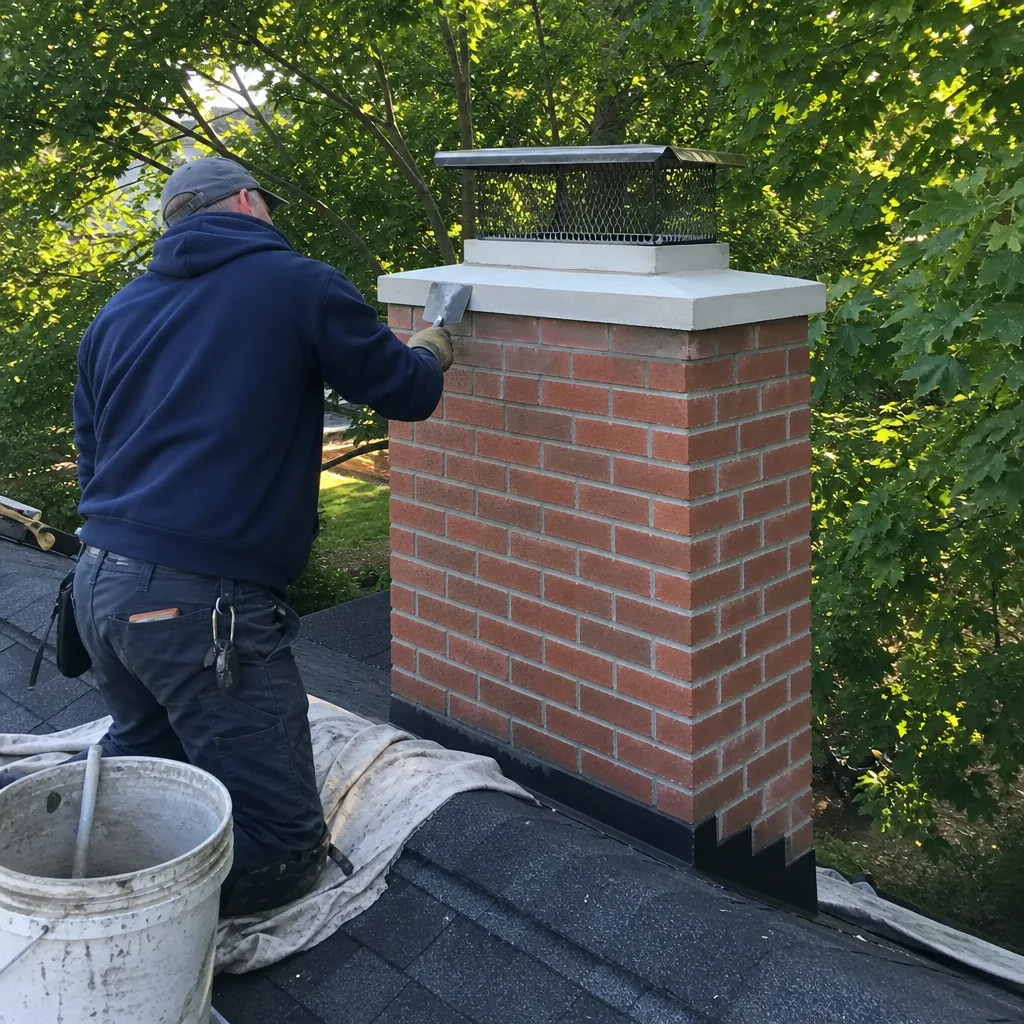 After
After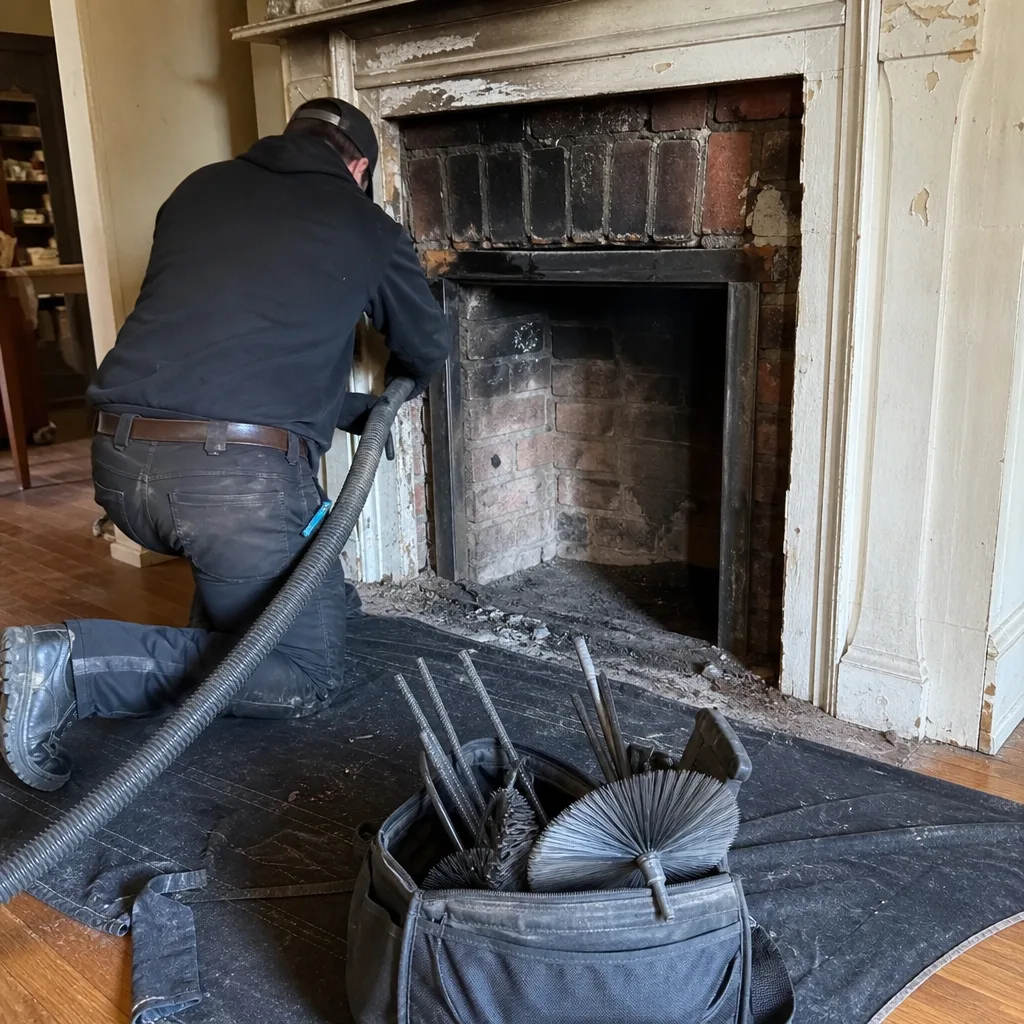 Before
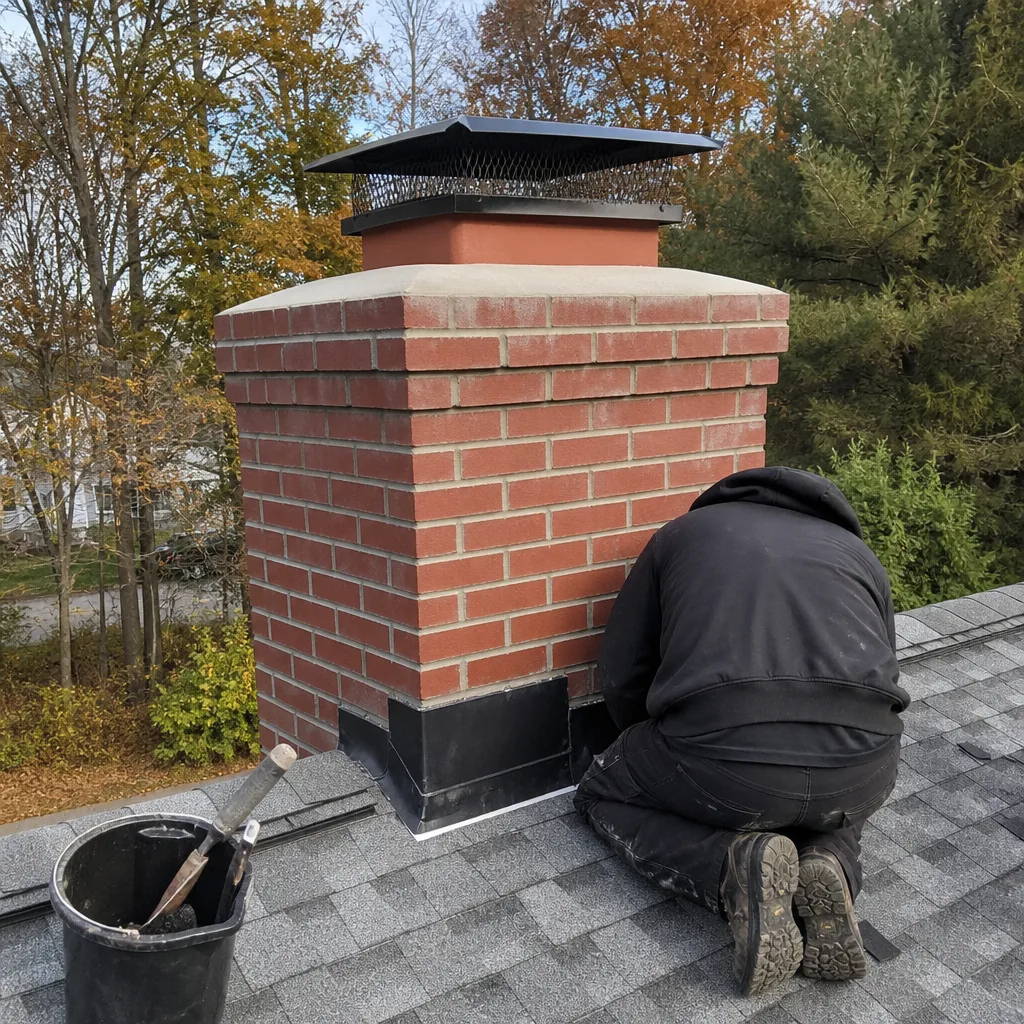 After
After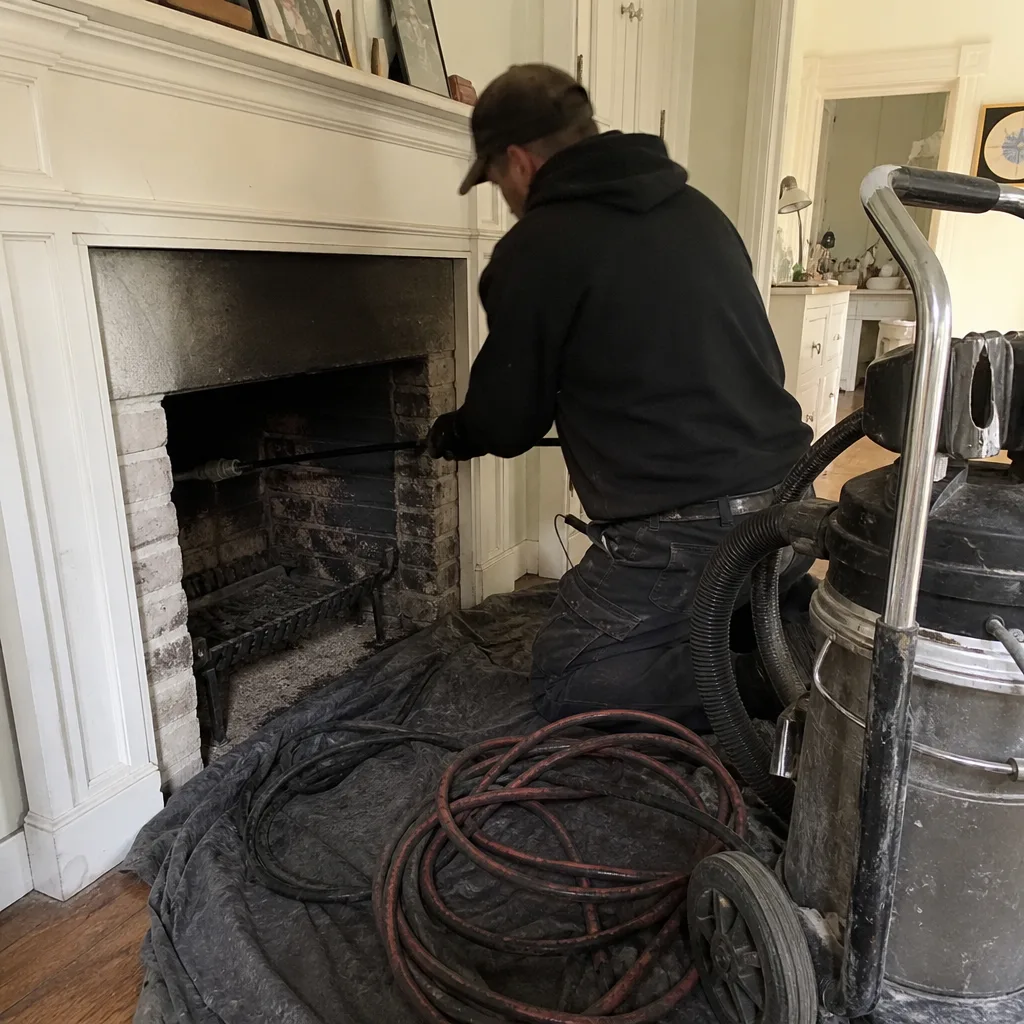 Before
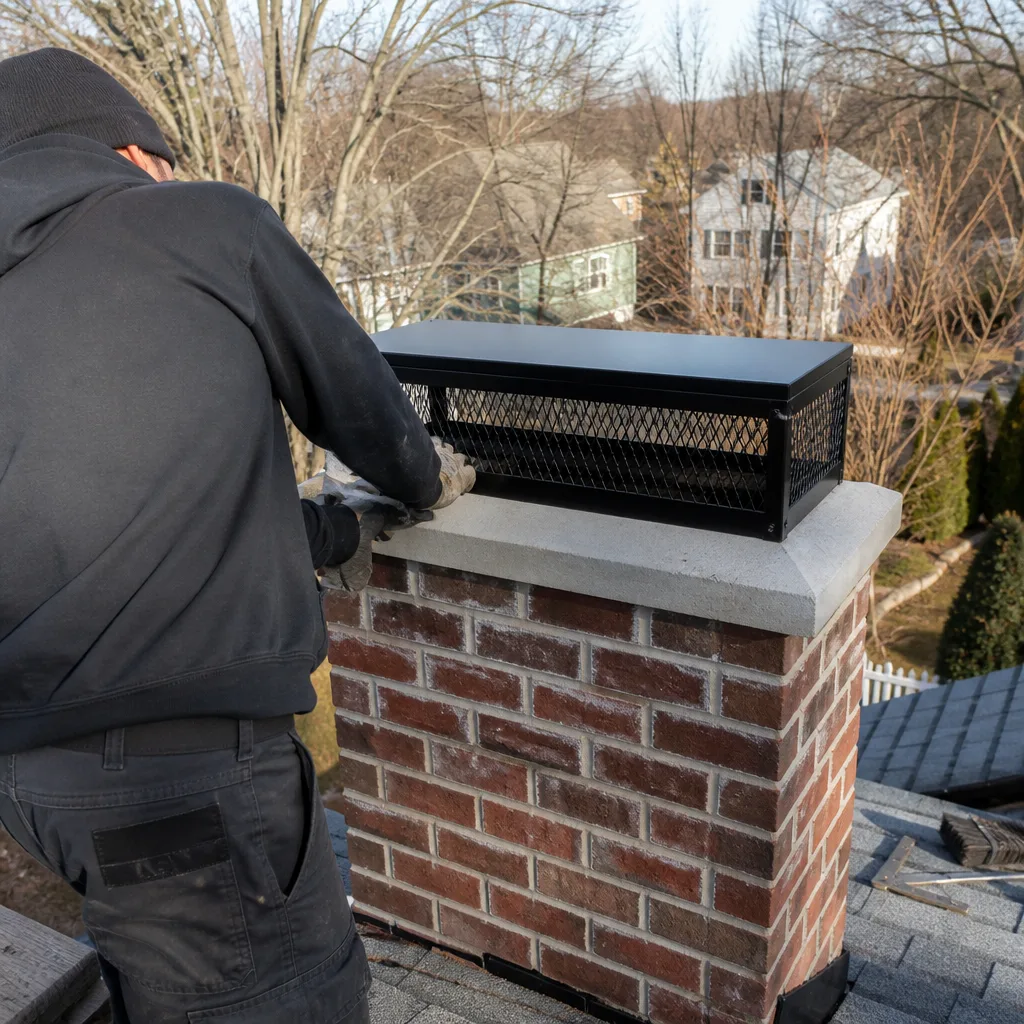 After
AfterChimney Cleaning Warning Signs: A Norwood Homeowner’s Reference Guide
A white stain running down the outside of a chimney looks harmless. It’s called efflorescence, and it means water is already moving through your masonry. And where water moves, your liner and firebox are next. Most Norwood homeowners don’t get burned by a chimney fire that came out of nowhere. They get caught by the quiet signals they talked themselves out of for two or three seasons. This guide documents exactly what those signals look like from three different vantage points, what they smell like, what they sound like, and which ones mean stop using the fireplace today versus schedule something this month. For more guides & resources on keeping your chimney safe, visit our blog.
Quick Answer
The warning signs that matter most are white staining on exterior brick, a smoky smell that lingers when the fireplace is cold, visible dark glaze inside the flue, and smoke that rolls into the room instead of drawing upward. Any one of these deserves a call. More than one means stop burning until a sweep has looked. In Norwood, where freeze-thaw cycles run from November through March, water-related warning signs escalate faster than in drier climates.
Table of Contents
- Visual Warning Signs: Inside the Firebox
- Visual Warning Signs: From the Living Room Floor
- Visual Warning Signs: From the Roofline
- The Smell Diagnostic: What Your Nose Is Telling You
- Sound and Draft Warning Signs
- Which Signs Mean ‘This Month’ vs. ‘Stop Using It Today’
- How to Document and Photograph Warning Signs Before You Call
- Common Mistakes to Avoid
- When to Call a Professional
- Frequently Asked Questions
- The Bottom Line
Visual Warning Signs: Inside the Firebox
Open the glass doors or pull aside the screen and look at the walls of the firebox itself. Most homeowners in Norwood never do this until something smells wrong, which is backwards. The firebox is where problems announce themselves earliest, because it’s the part of the system that takes direct flame contact and the first heat of every fire. Here’s what you’re looking at, and what each thing means.
- Flaking white or gray scale on the firebrick. This is spalling, and it means the brick has absorbed water and is now shedding its surface layer. In Norwood’s freeze-thaw winters, trapped moisture expands when it freezes and pops the brick face off. Spalled firebrick doesn’t just look bad. It means the firebox is no longer containing heat the way it should, and the gap between firebrick and the surrounding masonry becomes a place for creosote to collect where a brush can’t reach.
- Rusted damper hardware. A damper that’s stiff, squealing, or showing orange rust streaks is telling you moisture has been sitting in the chimney for a while. The damper is the first piece of metal that water hits when it comes down the flue. If the damper is rusted, the water has already passed through whatever liner you have, and the liner has probably been wet repeatedly.
- Shiny, tar-like glaze on the flue walls above the damper. This is third-stage creosote, sometimes called glazed creosote. It’s not the flaky stuff that brushes off with a sweep. It’s a hardened, concentrated fuel layer that forms when flue temperatures run hot and the chimney doesn’t get cleaned before the deposits bake on. Third-stage creosote is the leading contributor to chimney fires in Norfolk County. A standard brush cannot remove it. It takes chemical treatment or mechanical removal, and it’s the kind of thing you want to know about before your next fire, not after.
- Visible gaps or missing mortar between firebrick joints. Run your eye along the joints. If the mortar has receded, cracked, or fallen out in chunks, the firebox is shifting. That shift usually starts with water or thermal stress, and once joints open up, heat starts moving into places it was never supposed to go.
Wendell Pike has been inside enough Norwood chimneys to tell you the truth about firebox inspection: the firebox tells you how the chimney has been used, but not how it’s holding up. The flue above it tells you whether the system is still safe. A clean firebox with a glazed flue is a chimney fire waiting for the right afternoon. That’s why we push a camera up every flue we clean, every time, no exceptions. Your flue doesn’t care how the fire looks. It cares how it breathes.
If you’re seeing any of these signs and want a professional eye on it, we cover firebox inspection as part of every chimney cleaning and sweep in Norwood.
Visual Warning Signs: From the Living Room Floor
This is the vantage point most people actually use, because it’s where you sit when the fire is going. You’re not climbing up to the roofline or crouching in the firebox. You’re on the couch, and you’re seeing the chimney from the room’s perspective. Here’s what shows up from that angle.
- Smoke stains blooming on the wall or mantel above the fireplace opening. This is smoke rollout, and it’s not subtle over time. A faint gray or brown haze above the opening, a line of discoloration on the mantel, or a film on the glass doors that won’t come clean means smoke is not drawing up the flue the way it should. The causes range from a cold flue that needs preheating to a partial blockage to a liner that has narrowed from creosote buildup. A cold flue is an annoyance. The other two are hazards.
- Soot marks at the corners of the firebox opening. Soot that accumulates in the corners, especially on the outside edges of the opening, suggests the draft is pulling unevenly. That’s often a sign that the flue is partially restricted or the chimney cap has become obstructed. Uneven draft pushes smoke out any gap it can find, and the corners of the opening are the path of least resistance.
- Water stains on the ceiling or wall near the chimney chase. In Norwood’s older homes, the chimney runs through the center of the house, and a leak at the top of the chimney shows up as a brown stain on the ceiling of an upstairs room or the wall where the chimney passes. By the time you see the stain indoors, the leak has been active long enough to soak the surrounding framing. It’s not a cosmetic problem. It’s a structural one.
- Efflorescence on the interior brick face if your chimney is exposed inside the room. That same white salt stain from the roofline can appear on the interior brick. It means moisture is moving through the masonry from somewhere, and in a Norwood house with a center chimney, that moisture may be wicking down through a failed crown or a porous brick course.
From the living room, you’re also in the best position to notice how the fireplace behaves when it’s running. A fire that burns lazy, with flames that flatten and smoke that lingers at the lip of the opening instead of being pulled upward, is a draft problem. The flue is not moving air the way it was designed to. That’s worth paying attention to before the first cold snap of a Norwood winter.
If smoke stains or water marks are showing up in the room, our fireplace services in Norwood include a full draft and leak evaluation, not just a quick look at the firebox.
Visual Warning Signs: From the Roofline
Most homeowners don’t get up on the roof, which is fine. You don’t have to. But you should look at the chimney from the ground or from an upstairs window at least twice a year. The roofline view reveals things the living room and firebox can’t. Here’s what to look for.
- Efflorescence: the white stain. This is the one that opens this guide, and it’s the most commonly ignored warning sign in Norwood. Efflorescence is salt deposited on the surface of brick or stone as water moves through the masonry and evaporates. The white stain itself is not the problem. It’s the evidence of the problem. Water that moves through the chimney is water that eventually reaches the liner, the firebox, and the framing around the chimney. In a climate that freezes and thaws all winter, that water becomes expansion force. Efflorescence means the chimney has been wet. Repeatedly.
- Spalled or flaking brick faces on the exterior. You’ll see pieces of brick on the roof surface or in the gutter, or brick faces that look like they’ve shed a layer. This is freeze-thaw damage, and it’s accelerated in Norwood because winters alternate between hard freezes and mid-thirties thaws. Every spalled brick face is a little more surface area exposed to the next freeze.
- A cracked, crumbling, or missing chimney crown. The crown is the concrete cap that sits on top of the chimney stack and sheds water away from the flue liner. When the crown cracks, water gets into the space between the liner and the masonry. A crown with a hairline crack is a repair you can schedule. A crown that’s broken away in chunks is a problem that’s already put water into your chimney for at least one full season.
- A rusted or missing chimney cap. The cap keeps rain out of the flue and keeps animals out of the chimney. A missing cap in Norwood means rain goes straight down the flue, and rain plus creosote makes an acidic slurry that attacks the liner. It also means squirrels, raccoons, and birds can get in. A rusted cap is doing less than half its job.
- Dark staining on one side of the chimney exterior. If one side of the brick is noticeably darker than the others, that’s moisture that isn’t drying. It may be a flashing problem where the chimney meets the roof, or it may be water running down from a failing crown and pooling on one face. Either way, the brick is saturated, and saturated brick in Norwood winters is brick that’s about to spall.
If you’re up near the roofline and you see any of these, photograph them before you call us. It helps us give you a straight answer over the phone. And if you’re not comfortable getting up there, that’s fine too. The sweep who shows up at your door will have a camera that goes where you don’t need to.
For chimney crown work, cap replacement, or exterior masonry repair, that falls under chimney repair in Norwood, and we’ll always show you the camera footage before we recommend any of it.
The Smell Diagnostic: What Your Nose Is Telling You
Smell is the first warning sign most people actually notice, and it’s the one they’re most likely to dismiss. The smell diagnostic works like this: different smells mean different problems, and once you know the difference, you’re not guessing anymore. Here’s how to read them.
- Campfire smell that only appears when you light a fire. This is normal wood smoke. It means the flue is doing its job moving smoke upward. What you want to watch is whether that smell changes over the course of a burn. If it starts mild and turns acrid, or if it gets stronger even though you’re adding the same wood, that’s creosote buildup narrowing the flue and reducing the draft. The fire isn’t running as clean as it was in October.
- Campfire smell that’s present when the fireplace is cold and there hasn’t been a fire in days. This is not normal. It means creosote deposits inside the flue are off-gassing into the house, usually on humid days or when the barometric pressure drops. The chimney is breathing backwards. In Norwood, this is most common in late summer and early fall, when humidity is high and the chimney hasn’t been used in months. It means there’s enough creosote in the flue that it’s worth cleaning before the burning season starts.
- A musty, damp, basement-like smell from the fireplace. This is moisture. It means water is getting into the chimney and sitting there, often in the ash bed or the porous brick. If the smell is strongest after rain, that’s a flashing or crown leak. If it’s constant, the moisture may be wicking up from the foundation or coming down from a saturated chimney chase. Either way, a damp smell is water, and water in a chimney is never neutral. It’s actively working on your liner and firebox.
- A sharp, ammonia-like or animal smell. That’s animal intrusion. It means something has nested in the chimney, usually in the space between the liner and the masonry or in the smoke shelf above the damper. Birds, squirrels, and raccoons all leave droppings and nesting material that smell sharp and hang in the air on warm days. The animal itself may still be in there, or it may have left. Either way, the nest goes in and the cap goes on.
- An acrid, burnt-plastic or chemical smell during a fire. This is third-stage creosote actively reacting to heat. It’s the smell of the chimney getting too hot and the glaze breaking down. This is a stop-burning-today smell. The creosote has reached the point where it’s contributing to its own heating cycle, and you’re one hot fire away from a chimney fire.
One thing about smell: noses adapt. If you live in the house, you may have stopped noticing a smell that a visitor would pick up in thirty seconds. When in doubt, ask someone who doesn’t live there. Ask anyone on your street. A fresh nose will tell you more than a habituated one.
Sound and Draft Warning Signs
Sound is the most underrated diagnostic, because nobody sits and listens to their chimney. But your chimney is making noise all the time, and some of those noises are meaningful. Draft behavior is a sound and a feeling at the same time. Here’s what to notice.
- Delayed draw. You light the kindling and the smoke hangs in the firebox for a long moment before starting up the flue. In cold weather, this can just be a cold flue that needs preheating. A rolled-up lit newspaper held up near the damper for thirty seconds usually fixes it. But if the delayed draw persists after the flue is warm, or if it gets worse from year to year, that’s a restriction. It could be creosote, a partial blockage from a fallen brick or mortar chunk, or an animal nest. The flue is not moving air like it should.
- Smoke rollout during gusts. If smoke puffs back into the room when the wind hits the house from a certain direction, that’s a draft reversal. It usually means the chimney is too short for the surrounding roof structure, or the cap is creating turbulence instead of reducing it. Wind-related reversals in Norwood are common on exposed streets where houses sit close together and roof pitches are steep. A cap designed for draft stability usually solves it, but you want a sweep to confirm the cap is the issue before spending on one.
- Unusual popping or crackling from the flue. Wood pops, that’s normal. What’s not normal is cracking that sounds like it’s coming from inside the chimney itself, higher than the fire. That’s creosote expansion under heat. Creosote pops and snaps when it heats unevenly. If you hear it, the flue is heavily coated and the deposit layer is reacting to the fire. This is a sign to stop burning and get the flue cleaned before the next fire.
- A hollow, echoey rumble when wind passes over the chimney. This is often a cap or damper issue, and it’s more of an annoyance than a danger. But if the rumble is accompanied by smoke smell in the house when you’re not burning, the wind is pushing chimney air down into the room. That’s a draft problem worth fixing, especially for anyone in the house with respiratory concerns.
- Scratching, fluttering, or chittering inside the chimney. That’s an animal, full stop. It’s not your imagination. Birds flap, squirrels scratch, raccoons chitter. When you hear it, the animal is inside the flue or the chase, and the correct move is a cap installation after the animal is removed. This is not a DIY extraction situation. A trapped raccoon in a flue is an animal in distress, and a broom handle through the damper is how people get bitten. Call someone who handles this regularly.
Draft problems are particular to each house. In Norwood, where many chimneys are older center-chimney designs with clay tile liners, the most common draft issue we see is a liner that has cracked and narrowed from repeated heating and cooling. The chimney still works, but it works worse every year, and nobody notices until the smoke starts rolling out.
Which Signs Mean ‘This Month’ vs. ‘Stop Using It Today’
Not every warning sign is an emergency. Treating them all like emergencies makes you either panic or tune out. Treating none of them like emergencies is how chimney fires happen in Norwood every winter. Here’s the triage.
Stop using the fireplace today:
- Smoke rolling into the room and not clearing, even after the flue is warmed.
- An acrid, chemical smell during a fire that gets stronger with heat.
- Visible flames or glowing embers in the flue above the firebox. That’s a chimney fire already in progress. Call 911, then call us after.
- Popping or cracking from inside the flue that continues after the fire dies down.
- Any sign of animal activity combined with smoke draw problems. A nest can block the flue and push carbon monoxide into the house.
Schedule something this month:
- Efflorescence or water staining on the exterior brick.
- A damp, musty smell from the fireplace that doesn’t clear with weather.
- Spalled brick faces on the firebox or exterior.
- Rusted damper hardware or a rusted cap.
- Campfire smell when the fireplace is cold.
- Delayed draw that’s getting worse season to season.
The distinction matters because it tells you whether you’re looking at an immediate hazard or a deteriorating condition that’s cheaper to fix now than in February. In Norwood, February is when chimney problems become emergencies, because the furnace is running full-time, the fireplace is getting heavy use, and no one wants to be without heat while a repair gets scheduled. The people who call us in October with a lingering smell are glad they did. The people who call in February with a chimney fire are starting from a much harder place.
How to Document and Photograph Warning Signs Before You Call
This is the step that saves you money, because it gives us a straight view of the problem before we arrive. A homeowner who documents what they’re seeing is a homeowner who gets an accurate quote over the phone instead of a discovery-based surprise after the work starts. Discovery pricing is what the national chains do when they send a stranger to your door. We don’t do discovery pricing. But we still benefit from your photos, and so do you.
- Photograph the exterior from the ground, morning light if possible. Morning light rakes across the brick and shows efflorescence, spalling, and staining better than flat midday sun. Take one wide shot of the whole chimney stack and one close shot of anything that looks wrong.
- Photograph the firebox with a flashlight. Put the flashlight inside the firebox, pointed up at the flue, and take the photo from the room looking in. This shows the flue opening and the first visible section of the liner. It’s not a substitute for a camera inspection, but it gives context.
- Photograph the damper. Open it, shine the light on it, and take the photo. Rust, warping, and soot accumulation on the damper are visible in a photo.
- If you have access to the roof or an upstairs window, photograph the crown and cap. The crown is the concrete top, the cap is the metal cover above it. Cracks in the crown show up better in photos than in person, because you can zoom in later.
- Write down the smells and sounds with dates. One line per observation: “February 12, musty smell near fireplace after rain.” “March 3, popping sounds during a fire, lasted about ten minutes.” This log is genuinely useful. It tells us whether a problem is static or progressing, and that changes the recommendation.
- If smoke has rolled out, mark the wall stain with painter’s tape before you photograph it. This sounds fussy, but it shows exactly where the smoke line was relative to the firebox opening. A smoke stain eighteen inches above the opening is a different problem than a stain two inches above it.
When you call, tell us what you’ve got and we’ll tell you what we think it is and what it might cost. No-hassle upfront pricing before a single tool comes off the truck. The number you hear on the phone is the number on the invoice. And if you already have a written estimate from another company, we’ll give you a free second opinion on it.
Common Mistakes to Avoid
- Ignoring the white stain. Efflorescence is the most common exterior warning sign in Norwood, and the most commonly waved off as “just how old brick looks.” It’s not. It’s water. And water in a chimney is a time bomb with a long fuse, but the fuse always burns down.
- Burning a fire to “burn off” creosote. You cannot burn off third-stage creosote with a hot fire. What you can do is ignite it. If you suspect heavy creosote, the correct move is a sweep, not a hotter fire.
- Waiting until fall to think about the chimney. In Norwood, the best time to have a chimney cleaned and inspected is spring or summer, when temperatures are mild, demand is lower, and any repairs can be done before the burning season. Once a year, burn or no burn. Chimneys break in the off-season too.
- Assuming a gas fireplace doesn’t need service. Gas fireplaces produce different byproducts but they still use a flue, and the flue still needs to be checked for blockages, animal nests, and water damage. A gas fire running with a blocked flue is a carbon monoxide risk. This is one of the most dangerous assumptions a homeowner can make.
- Patching over a smoke stain without fixing the draft. The stain will come back. Smoke stains mean smoke is not going up the flue. Painting over it is cosmetics. The flue is the problem.
- Hiring by price alone without a camera inspection. A $79 sweep special that doesn’t include a camera inspection is a brush through the flue and nothing else. It tells you nothing about the liner, the crown, the cap, or the firebox. You’re paying for a cleaning but getting none of the information that keeps you safe. In our experience, a camera inspection is the difference between knowing your chimney and just having a receipt.
- Waiting until smoke rolls into the room to investigate a smell. By the time smoke rolls out, the draft is seriously compromised. Smell usually comes first. If you smell it, use the diagnostic in this guide and make a call. It’s cheaper and safer than waiting for the visual proof.
When to Call a Professional
Call when you see any sign from the “stop using it today” list, when any visual warning sign has been present for more than a season, or when you can’t remember the last time the chimney was swept. Not sure who to trust? Read How to Hire a Chimney Cleaning Contractor in Norwood: A Step-by-Step Guide before you book anyone. A standard inspection and cleaning answers most questions in about an hour, and it costs less than what most homeowners spend on one dinner out. Top Hat Chimney offers free estimates in Norwood. Call (508) 687-5884 and a live person answers, around the clock, no voicemail box and no call center. Wendell and his crew have been serving Norwood and the surrounding towns since 1999. The camera footage and a plain-English verdict come with every job, every time, no exceptions.
Frequently Asked Questions
Once a year, burn or no burn. The National Fire Protection Association recommends annual inspection and cleaning as needed, and Norwood’s climate reinforces that. Freeze-thaw winters move water through masonry, humid summers make creosote off-gas, and animals look for shelter year-round. An annual sweep catches all three before they compound. If you burn more than three cords a season, you may need a mid-season cleaning as well.
A chimney fire sounds like a low rumble, a freight train, or sustained loud popping from inside the flue, and it’s often accompanied by flames or dense smoke from the chimney top. If you hear or see any of that, get everyone out of the house and call 911. After the fire department clears the scene, call us. The chimney will need a full inspection before it’s used again.
That smell means creosote deposits are off-gassing into the house, usually on humid days or when air pressure drops. It means there’s enough creosote in the flue that the chimney is breathing backwards into your living space. A sweep resolves it by removing the deposits. If the smell is musty instead of smoky, you’re looking at a moisture problem, not a creosote problem.
You can brush a chimney from the top if you have the right equipment and you’re comfortable on a roof, but you can’t inspect a liner from the top, and you can’t evaluate a firebox with a brush. Our DIY vs Professional Chimney Cleaning: The Norwood Homeowner’s Decision Guide breaks down exactly where DIY ends and professional work begins. The danger of DIY chimney work isn’t the brushing. It’s the false sense that a swept flue means a safe flue. A cracked liner, a failed crown, or an animal nest in the smoke shelf all go unnoticed without a camera. And a rooftop in Norwood in November is not where you want to learn about roof pitches. Wendell will tell you plainly when a chimney doesn’t need work. He’ll also tell you when it does.
A standard cleaning and inspection in Norwood typically runs between $189 and $350, depending on the height of the chimney, the condition of the flue, and whether animals have left anything behind. Repairs are quoted separately after the inspection, and we don’t recommend a repair without showing you the camera footage that justifies it. Call (508) 687-5884 for an exact quote. Estimates are free, and there’s no trip charge inside the county.
Gas fireplaces don’t produce creosote, but they still need the flue checked for blockages, animal nests, and water damage. A gas fire running with a partially blocked flue can push carbon monoxide into the house, which you won’t smell and won’t see. The inspection interval is the same as wood: once a year. The risks are different, but they’re not smaller.
Efflorescence itself is cosmetic. What it represents is not. It’s proof that water is moving through your chimney masonry, and that water is going somewhere. In Norwood, where winters freeze and thaw repeatedly, trapped water expands and contracts, spalling brick and cracking mortar. The white stain is the first visible sign of a process that ends with a liner replacement or a firebox rebuild. Treat it as the warning it is.
For a complete overview of what we do, start at the Top Hat Chimney home page.
The Bottom Line
Your chimney talks to you through stains, smells, sounds, and smoke. The problem is that most of these signals are quiet, and every one of them is easy to explain away. A white stain looks like old brick. A musty smell seems like basement dampness. A delayed draw feels like a cold flue. But in Norwood, where winter pushes every small chimney problem into a big one, ignoring the signals costs more than acting on them. The fix for most of what this guide describes is a sweep and an inspection, which is a lot cheaper than a liner replacement, a firebox rebuild, or a chimney fire. Once a year, burn or no burn. Watch for the signs. Call when you see them. The chimney is not going to fix itself.
Written by Wendell Pike, Owner at Top Hat Chimney, serving Norwood since 1999.