
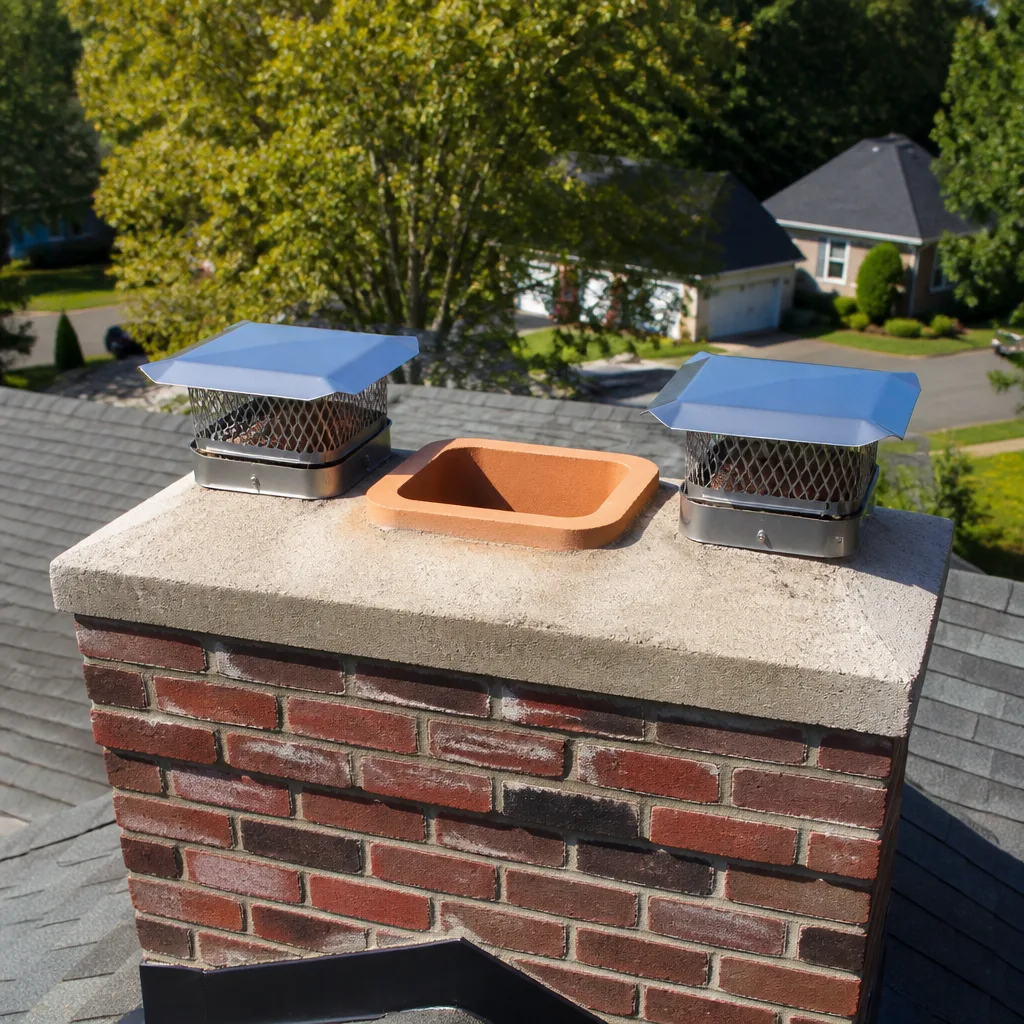
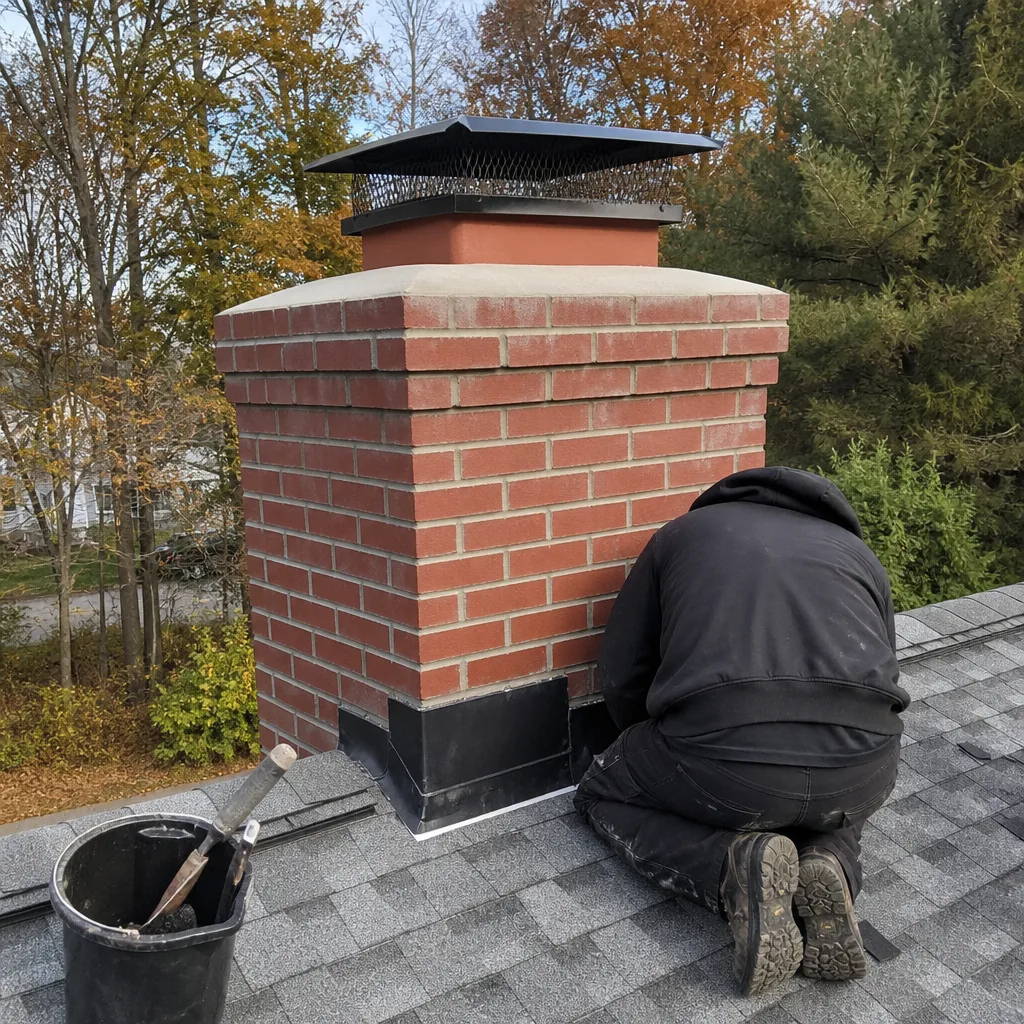
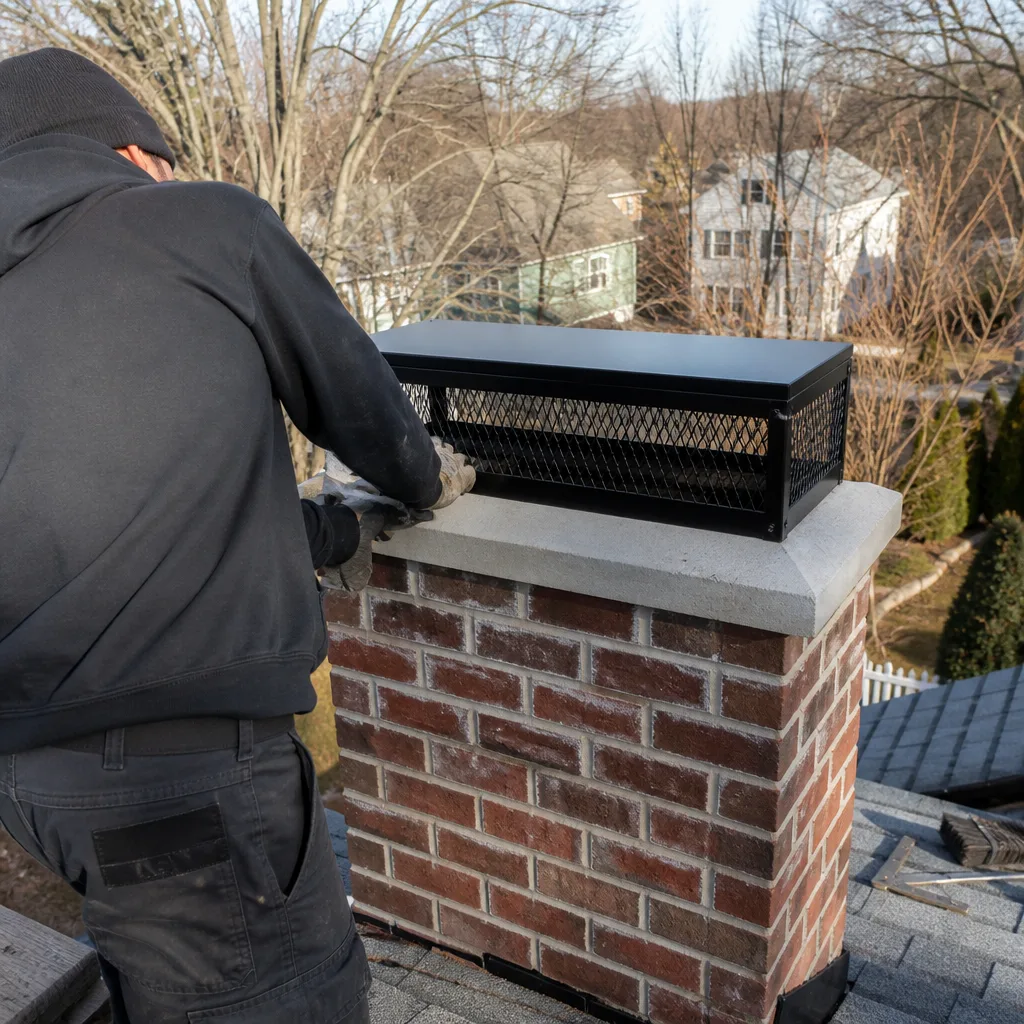
Level 1 sweep and inspection to the NFPA 211 annual standard - flue, crown, cap, and flashing checked and photographed
Chimney sweep logs do not sweep chimneys. They loosen some creosote - which then falls where a brush and vacuum still have to collect it.
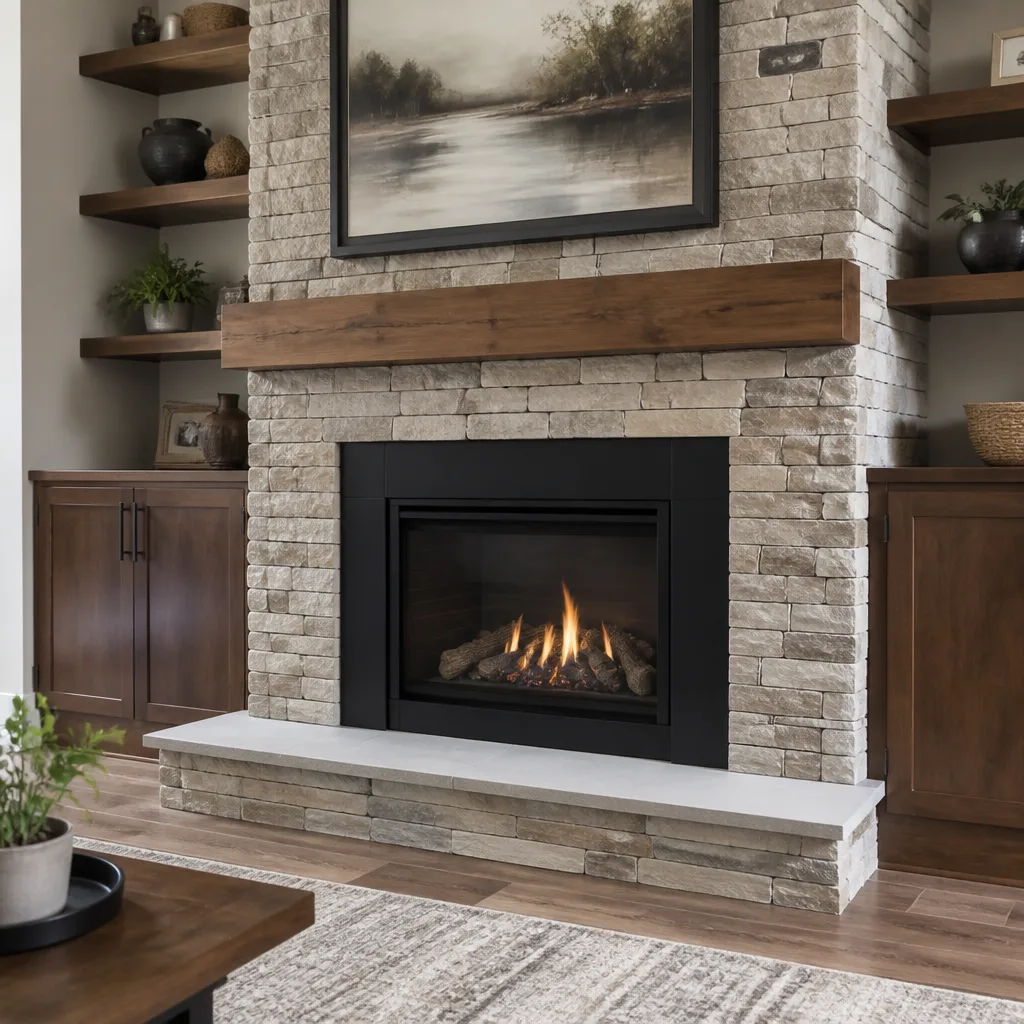
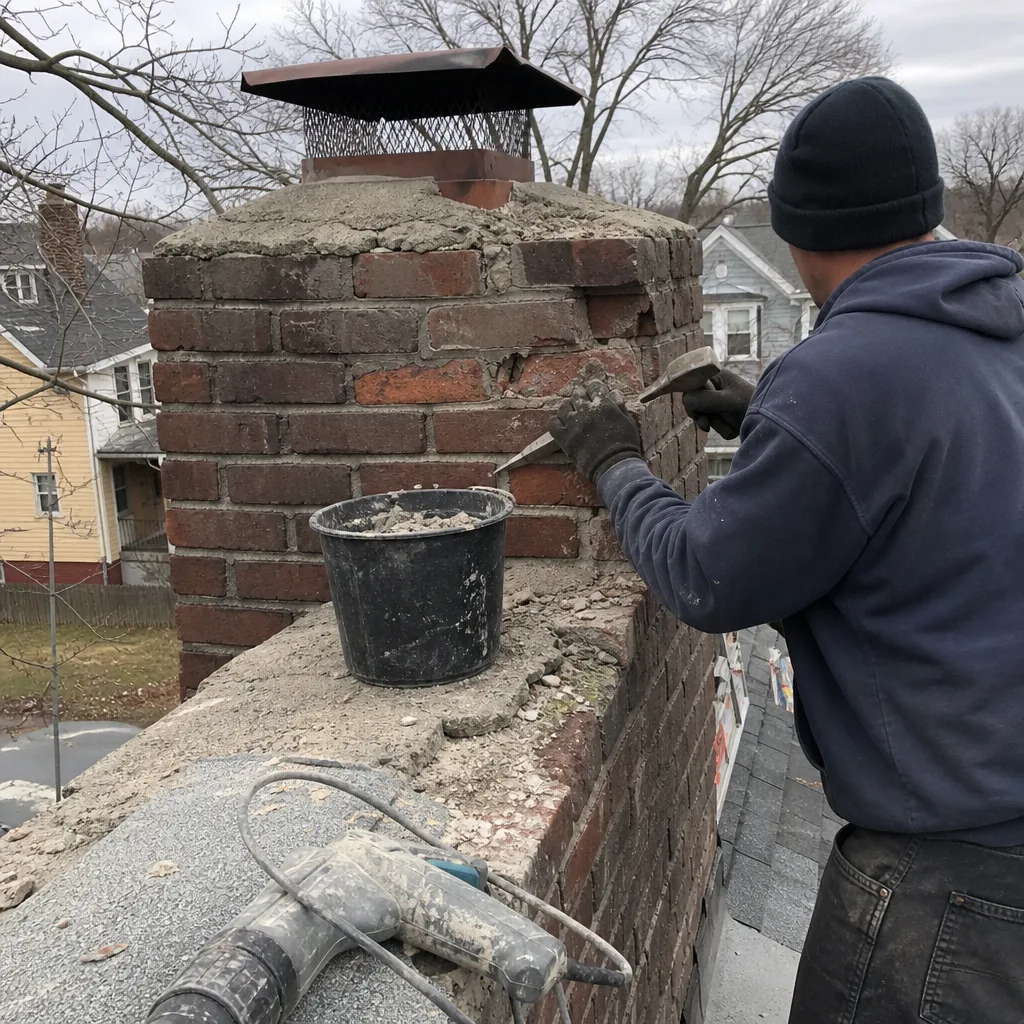 Before
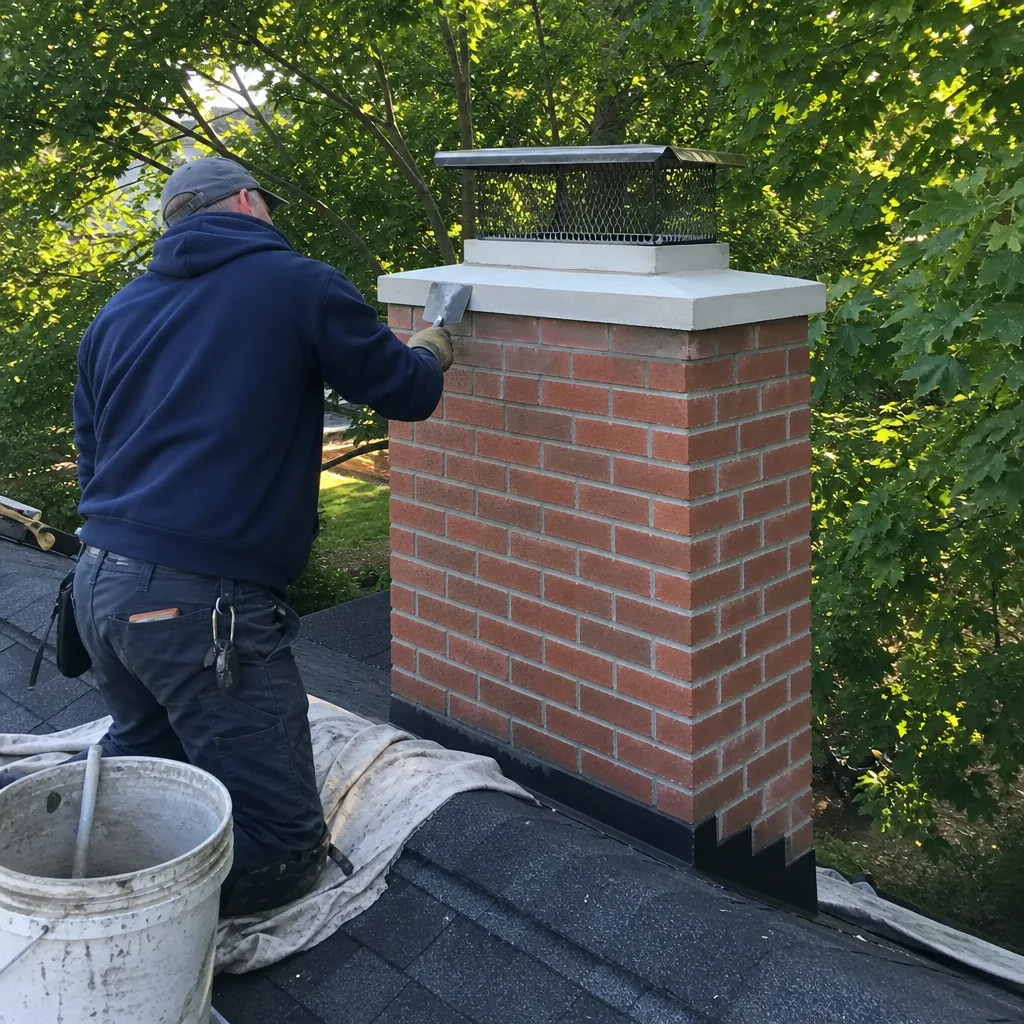 After
After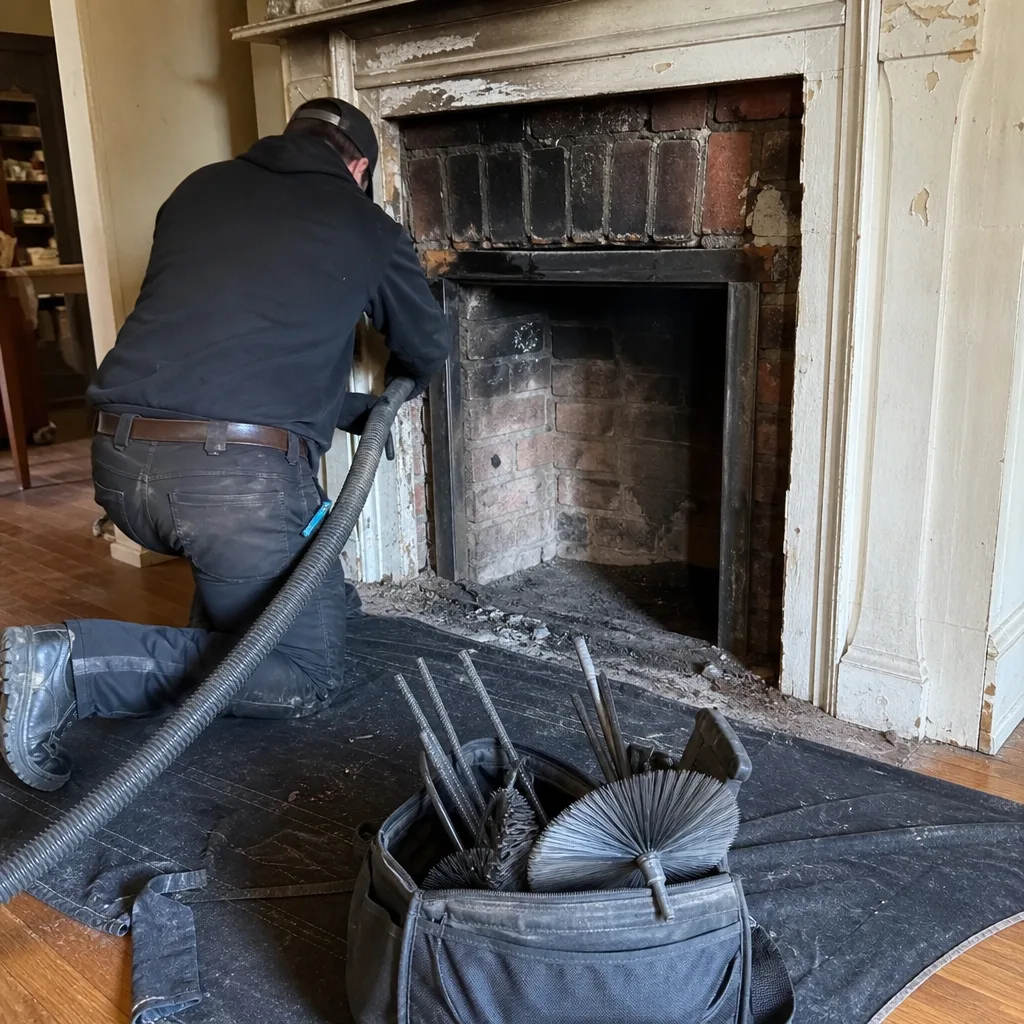 Before
 After
After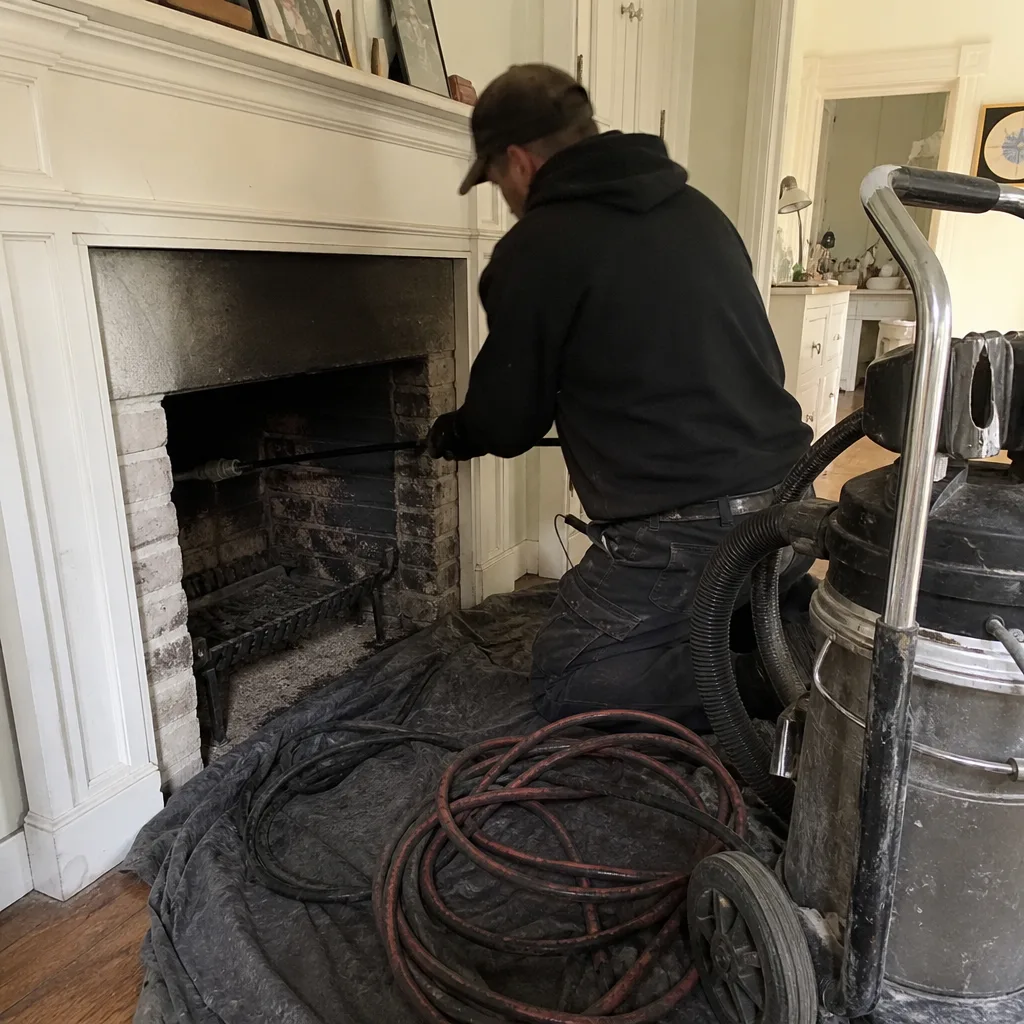 Before
 After
AfterCreosote Removal in Norwood, MA
Creosote removal in Norwood typically runs between $150 and $600 depending on how far the buildup has progressed – a light first-degree coating is a straightforward brush job, while third-degree glaze can require chemical treatment and a full day’s work. Most homeowners who call us catch it somewhere in the middle, and we’ll tell you exactly what stage you’re at before a single tool comes off the truck.
Wendell Pike started Top Hat Chimney in 1999, and in the 29-plus years since, he’s cleaned more chimneys in Norwood and the surrounding towns than he can honestly count. If you’ve got a fireplace or wood stove and you’re burning – or you burned last season and haven’t had the flue looked at with a Level 1 Inspection – creosote is the one thing worth taking seriously. It’s the leading cause of chimney fires in Massachusetts, and most of them are preventable with a sweep done on schedule.
For the full picture on what a chimney cleaning visit covers, see our Chimney Cleaning & Sweep in Norwood page. Or if you want to talk it through right now, call us at (508) 687-5884 – a live person will pick up, and it may well be Wendell himself.
What Creosote Actually Is – and Why Norwood Homes See So Much of It
Creosote forms every time wood burns. Smoke rises through the flue, cools against the liner walls, and leaves behind a residue that’s part tar, part carbon, and part combustion byproduct. The slower and cooler the burn, the more creosote accumulates. That’s why wood stoves set to a slow overnight smolder – common in Norwood homes during our long November-through-March heating season – tend to build up deposits faster than an open fireplace running hot for a couple of hours on a weekend evening.
Norwood sits in an area where a lot of homes were built between the 1950s and 1980s. Many of those chimneys have original clay tile liners that weren’t designed for today’s wood stoves, or they’ve developed hairline cracks over the decades that create turbulence in the flue and slow the draw. Slow draw equals lower flue temperatures equals more creosote. We see it constantly in the Washington Street corridor and in the older Cape-style homes along Prospect and Neponset.
There are three stages, and they behave very differently:
- First-degree (light flake or dust): Dry and brushable. This is what you want us to find. It comes off cleanly and the job is done in an hour.
- Second-degree (tar flake or crunchy): Denser, starting to harden. Still removable mechanically, but it takes more passes and the right brush diameter. Some deposits need a rotary system.
- Third-degree (glaze): Shiny, hard, and bonded to the liner like lacquer. A brush won’t touch it. This stage requires a chemical application to break the bond before mechanical removal can begin – and in severe cases, we’re also having a serious conversation about the liner underneath.
Third-degree buildup is the one that ignites. A chimney fire in this stage burns at over 2,000 degrees Fahrenheit – hot enough to crack clay tile liners, warp metal flues, and set roof structure on fire. We’re not trying to scare anyone; we’re telling you what we actually see when a job goes wrong. Catch it early and it’s a brush job. Don’t catch it, and the repair bill makes the cleaning fee look like a rounding error.
When You Need Creosote Removal
- You burned wood regularly last winter and haven’t had the flue swept since spring. Creosote doesn’t air out over the summer. Whatever was in there in March is still in there now, and it’s had eight months to harden.
- You’re noticing a strong smoky or tarry smell even when the fireplace isn’t in use. In Norwood’s humid summer months, moisture activates the odor compounds in creosote deposits. If the house smells like a campfire in July, the flue needs cleaning before it needs anything else.
- Your fires have been burning cooler or slower than they used to. A partially blocked flue restricts the draw. Fires that take longer to establish, smoke more than they should, or die down faster are often telling you the liner is narrowed by buildup.
- You’ve been burning unseasoned or “green” wood. Wood that hasn’t dried for at least 12 months produces far more smoke and far more creosote per cord than properly seasoned hardwood. One winter of green oak or freshly cut softwood can push a flue from first-degree to second-degree in a single season.
- A previous sweep mentioned “heavy deposits” but you didn’t follow up on the recommendation. We hear this more than we’d like. A note on an inspection sheet isn’t a scare tactic – it’s a factual finding. If someone said the deposits were heavy and you’re coming back to us a year or two later, we need to look at what’s there now before the next burn season starts.
- You bought the house and don’t know the maintenance history. Several real estate transactions in Norwood each year involve homes where the chimney hasn’t been touched in a decade or more. We can tell in about ten minutes what we’re dealing with – camera goes in, Wendell tells you what he sees, no guesswork.
Our Creosote Removal Process
- Pre-job inspection with the camera. Before anything else, Wendell or one of his crew runs a camera through the flue from the firebox to the crown. This isn’t an upsell – it’s how you know what stage the creosote is at, whether the liner has pre-existing damage, and whether the job is a brush sweep or a chemical treatment. You see the footage, and you get a plain-English verdict on what’s there.
- Fireplace and floor protection. Drop cloths go down on the hearth and surrounding flooring. A HEPA-rated vacuum with negative pressure runs at the firebox opening through the whole job. In 29 years, we’ve left a few homes in Norwood with less dust than we found – that’s the standard we hold to.
- Mechanical removal – brush and rod system. For first- and second-degree deposits, we work top-down with professional chimney brushes sized to your flue’s interior dimensions. Copperfield brush sets are what we run for most clay tile and stainless liner work – they’re the right tool for the job and they don’t tear up old mortar.
- Chemical treatment for third-degree glaze (when required). If the camera shows hard glaze, we apply a creosote-modifying chemical to the liner walls before and sometimes after the mechanical pass. The chemistry changes the structure of the glaze from a hard bond to a friable coating that can then be removed mechanically. This step adds time and cost, but it’s the only way to actually clean a glazed flue – a brush alone on third-degree creosote is theater, not cleaning.
- Post-removal camera pass and documentation. Once the flue is cleared, the camera goes back in. You can see the before and after. If something in the liner was masked by the buildup – a cracked tile, a shifted joint, deteriorated mortar – we’ll find it now and show you before we discuss any next steps.
- Cleanup and written summary. Every job ends with a written summary of what we found, what we did, and any recommendations. The 90-Day Done Right Promise covers every completed job: if something isn’t right, one call brings us back at no additional cost. That promise is on paper, not just in the conversation.
Creosote Removal Pricing in Norwood
Creosote removal in Norwood costs between $150 and $600 for most residential jobs, though severe third-degree buildup with chemical treatment can run higher. Here’s how the numbers typically break down:
| Creosote Stage | Typical Price Range | What’s Included |
|---|---|---|
| First-degree (light, brushable) | $150 – $229 | Inspection, brush sweep, HEPA vacuum, written summary |
| Second-degree (dense flake/tar) | $230 – $375 | Above plus extended rotary passes, camera before and after |
| Third-degree (hard glaze) | $375 – $600+ | Chemical treatment, multiple mechanical passes, full camera documentation |
| Add-on: liner inspection with written report | $75 – $125 | Detailed camera footage review, written condition report |
A few things affect where your job lands in those ranges: how long the flue is, whether it bends (an offset flue takes longer to work through than a straight one), the condition of the liner underneath the deposits, and whether we need to access the roof for the top-down pass. Older Norwood colonials with two-story chimneys and clay tile liners sometimes take an extra hour over a simple ranch with a short, straight run.
We price upfront – the number Wendell quotes on the phone is the number on the invoice. If the camera turns up something that changes the scope, we stop, show you what we found, and talk about options before continuing. No surprise charges after the job is done.
If you have a competing written estimate from another company, we offer a free second opinion. If a repair comes out of the inspection and it’s over $200, you’ll get $40 off automatically. Seniors and veterans always receive 10% off. And there’s no trip charge for calls inside our service area.
Call (508) 687-5884 to get a real number for your specific chimney – estimates are free and we’ll tell you honestly if the job is simpler than you thought.
FAQs – Creosote Removal in Norwood
How often does creosote need to be removed from a chimney in Norwood?
Once a year is the right interval for any chimney that sees regular use – the National Fire Protection Association (NFPA 211) says so, and Wendell says so because he’s seen what happens when people skip years and their Chimney Cleaning & Sweep services. If you’re burning every day through a cold Norwood winter, you may need two sweeps: one at the end of the heating season and one before it starts again. Chimneys that sat unused still need a look in the spring – animals nest, liners crack, and mortar shifts over the off-season whether you lit a fire or not. Once a year, burn or no burn.
Can I remove creosote myself?
First-degree buildup can be partly addressed with chimney cleaning logs that sell at hardware stores – they modify the creosote chemistry and help it fall away. But they’re not a substitute for a physical Fireplace Cleaning, and they do nothing meaningful for second- or third-degree deposits. Working on a chimney flue requires being on the roof or working in a dark, confined firebox with rotary tools and a containment vacuum running. There’s no shame in leaving it to a sweep who has the right gear and the camera to verify the result. Third-degree glaze specifically involves chemical applications that need to be matched to your liner type – getting that wrong can damage the liner you were trying to protect.
What does a chimney fire from creosote actually sound like?
Most people describe a low roaring or rumbling sound, sometimes compared to a freight train in the walls. You may see flames or dense black smoke from the top of the chimney, or feel intense heat at the firebox. If you suspect a chimney fire, close the damper and any air inlets, get everyone out, and call 911. Do not use the fireplace again until a sweep has inspected the liner – a chimney fire can crack a clay tile liner in ways that aren’t visible from the firebox but will let fire into the framing on the next burn. Call us at (508) 687-5884 after the fire department clears the scene and we’ll get in to assess the damage.
How do I know if the creosote removal actually worked?
The camera footage is your proof. We run the camera before and after every job, and you can watch the post-clean pass in real time or review it with us before we leave. A clean flue shows the liner walls clearly – you can see the tile joints, the mortar, any existing cracks. If the walls are still coated or there’s visible residue, the job isn’t done. That’s a simple standard to hold us to, and we welcome it. The 90-Day Done Right Promise covers exactly this: if the job wasn’t done right, one call brings us back.
Creosote and What Comes After
Sometimes a thorough creosote removal is the whole story. The flue is clean, the liner is solid, and Wendell will tell you to call us again next fall. That’s a good outcome and a common one.
Sometimes the camera finds something underneath the buildup – a cracked tile section, a gap in the liner, or a crown that’s letting water in and accelerating deterioration. When that happens, we’ll show you the footage, give you a written summary of what’s there, and let you decide how to proceed. If a Level 2 Inspection is needed, we’ll explain why. We’re not going to invent a problem to sell you a liner. But we’re also not going to sign off on a chimney that has damage we can see and say nothing about it.
If a liner replacement or repair does come out of the inspection, Top Hat Chimney installs DuraFlex stainless liner systems and works with Olympia Chimney supply on liner components and chimney caps. We’ve been doing this work in Norwood and across Norfolk County since 1999, and the brands we use are the ones we’d put in our own homes.
Wendell’s name is on the truck and on the invoice. He runs into his customers at the Norwood post office and at Roche Bros. on a Saturday. That’s not a marketing line – it’s a practical description of why the work gets done right the first time.
To read more about what a full chimney cleaning visit involves, visit our home page or go back to the main Chimney Cleaning & Sweep in Norwood overview for the complete picture.
Schedule Creosote Removal in Norwood
If your chimney hasn’t been swept since last spring – or if you honestly can’t remember when it was last done – call us before the next fire season starts. We serve Norwood and the surrounding towns, we answer the phone around the clock, and estimates are always free. The number is (508) 687-5884. A live person will pick up. Tell us what you’ve got and we’ll tell you what it’s likely to take – honestly, before we ever show up at the door.
Written by Wendell Pike, Owner at Top Hat Chimney, serving Norwood since 1999.