
Last updated September 10, 2026
Level 1 sweep and inspection to the NFPA 211 annual standard - flue, crown, cap, and flashing checked and photographed
Chimney sweep logs do not sweep chimneys. They loosen some creosote - which then falls where a brush and vacuum still have to collect it.
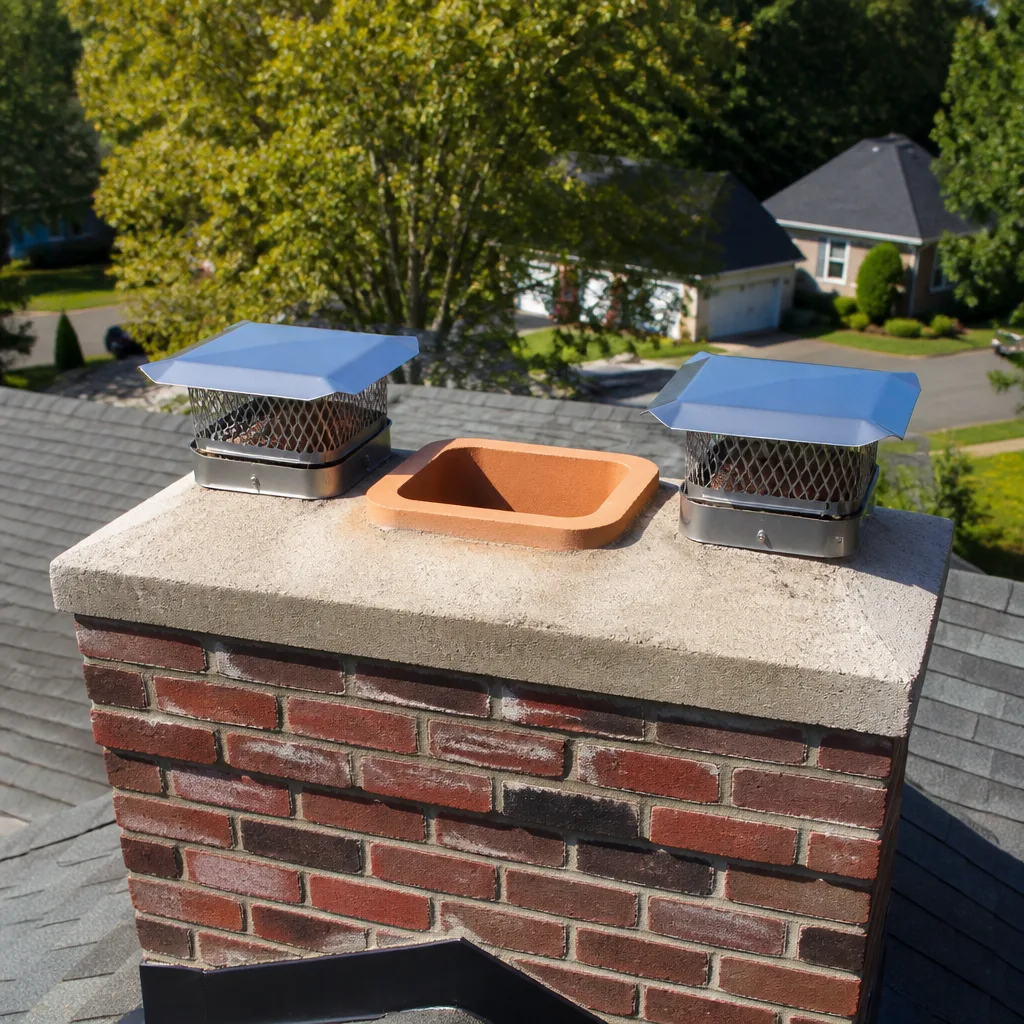
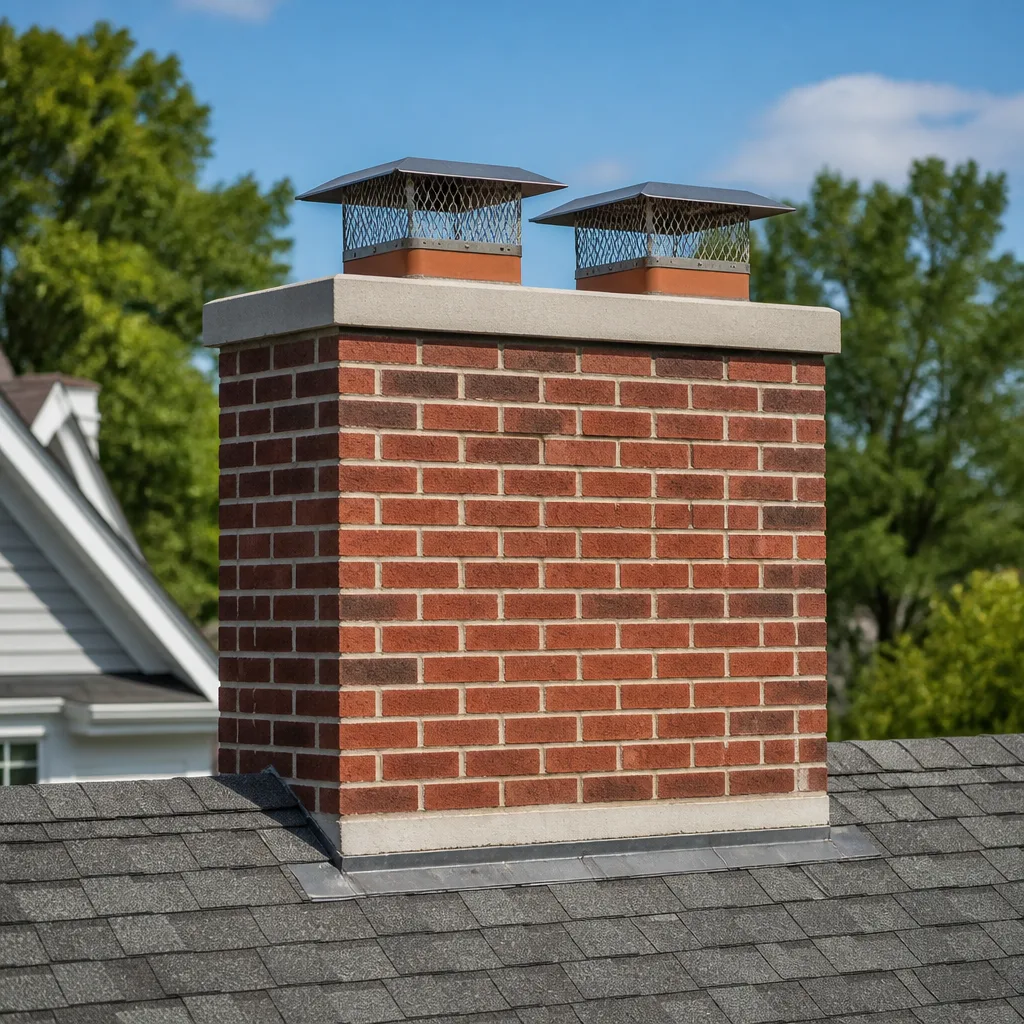
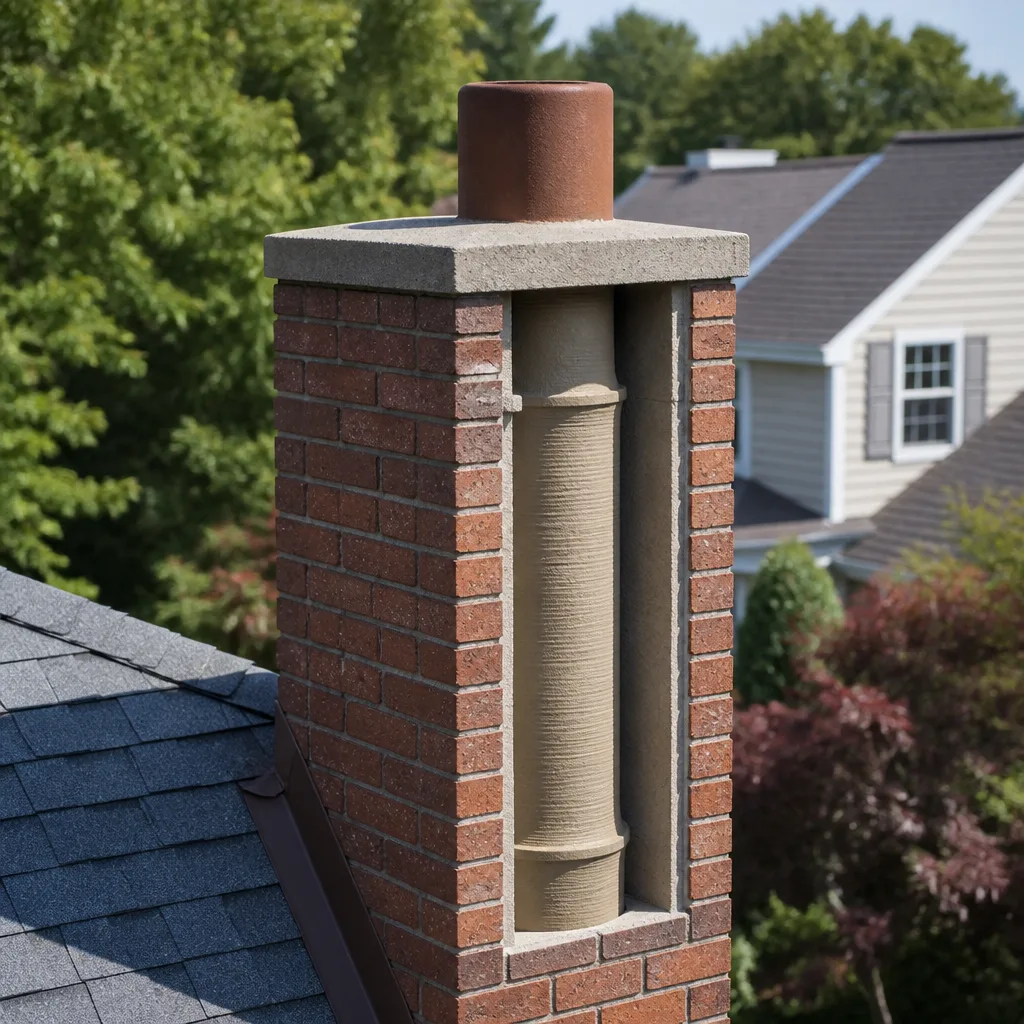
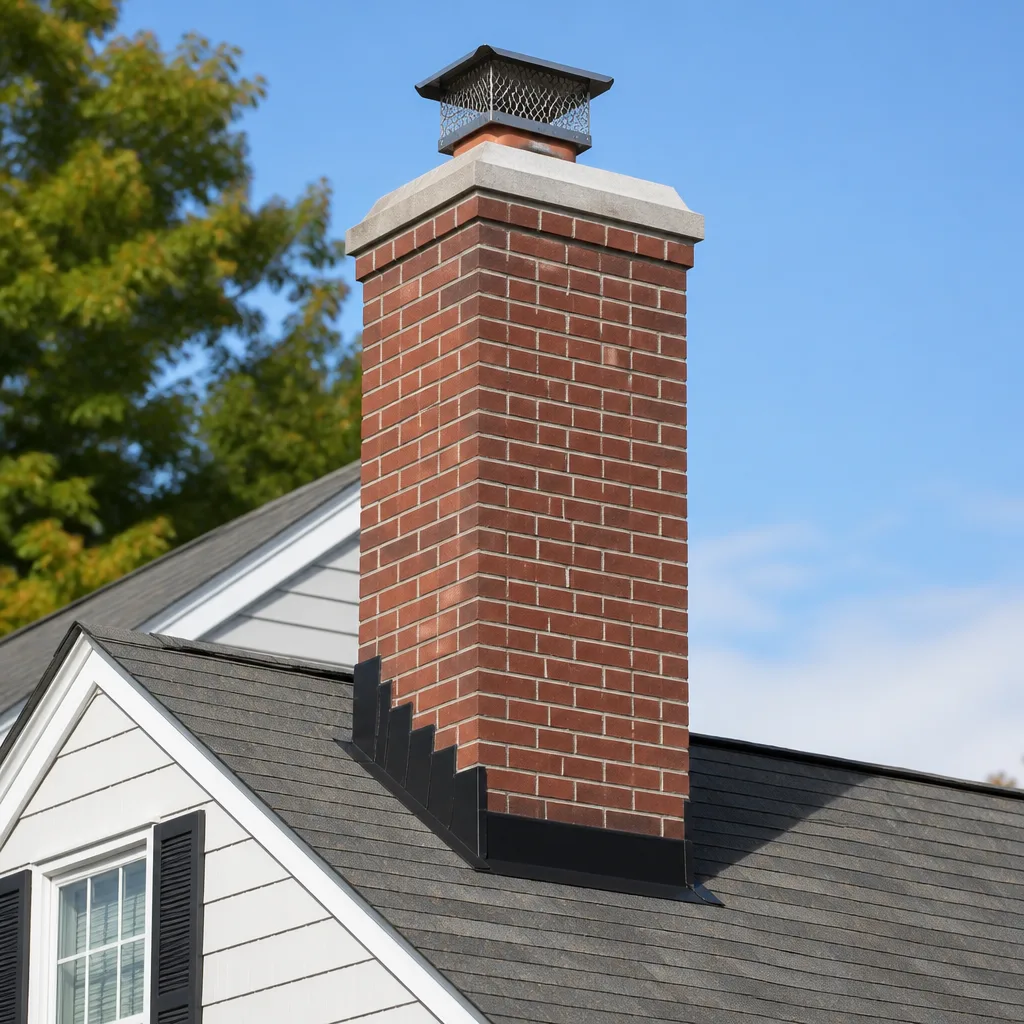
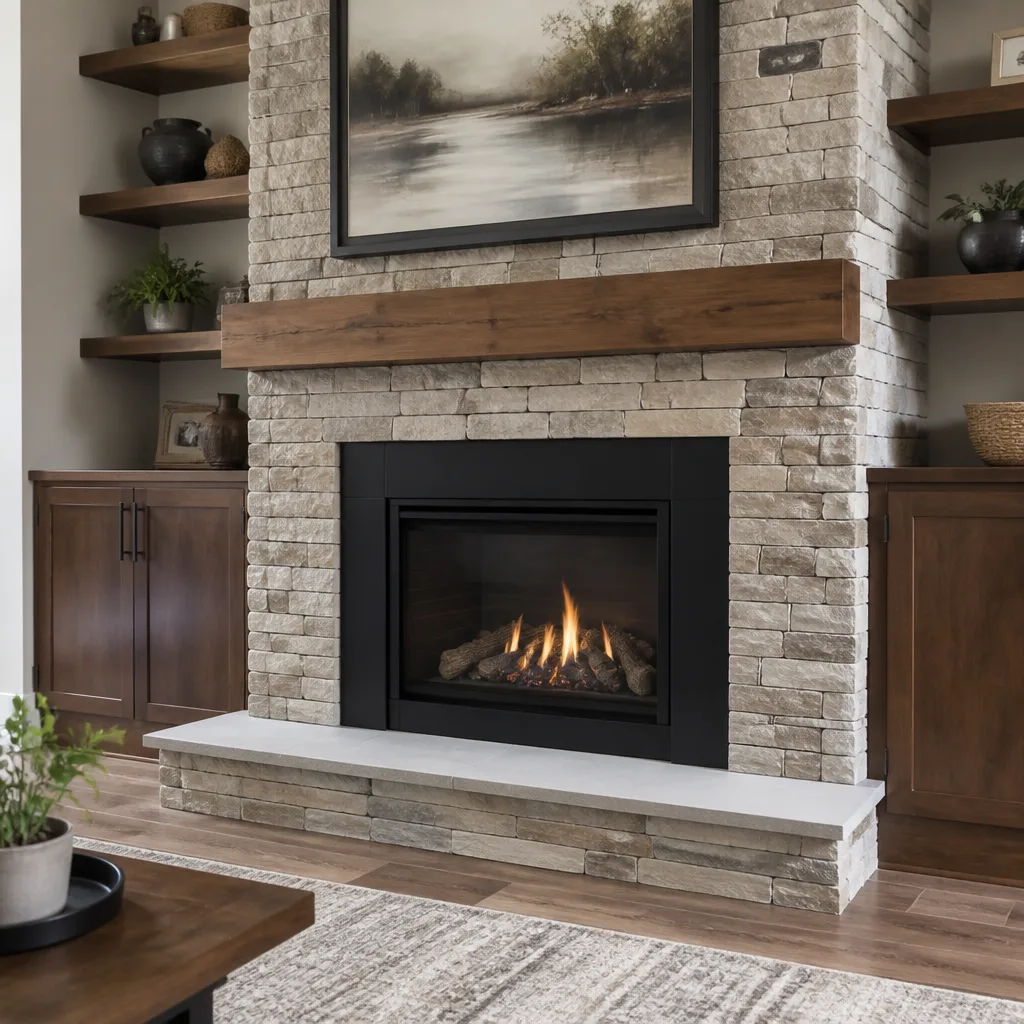
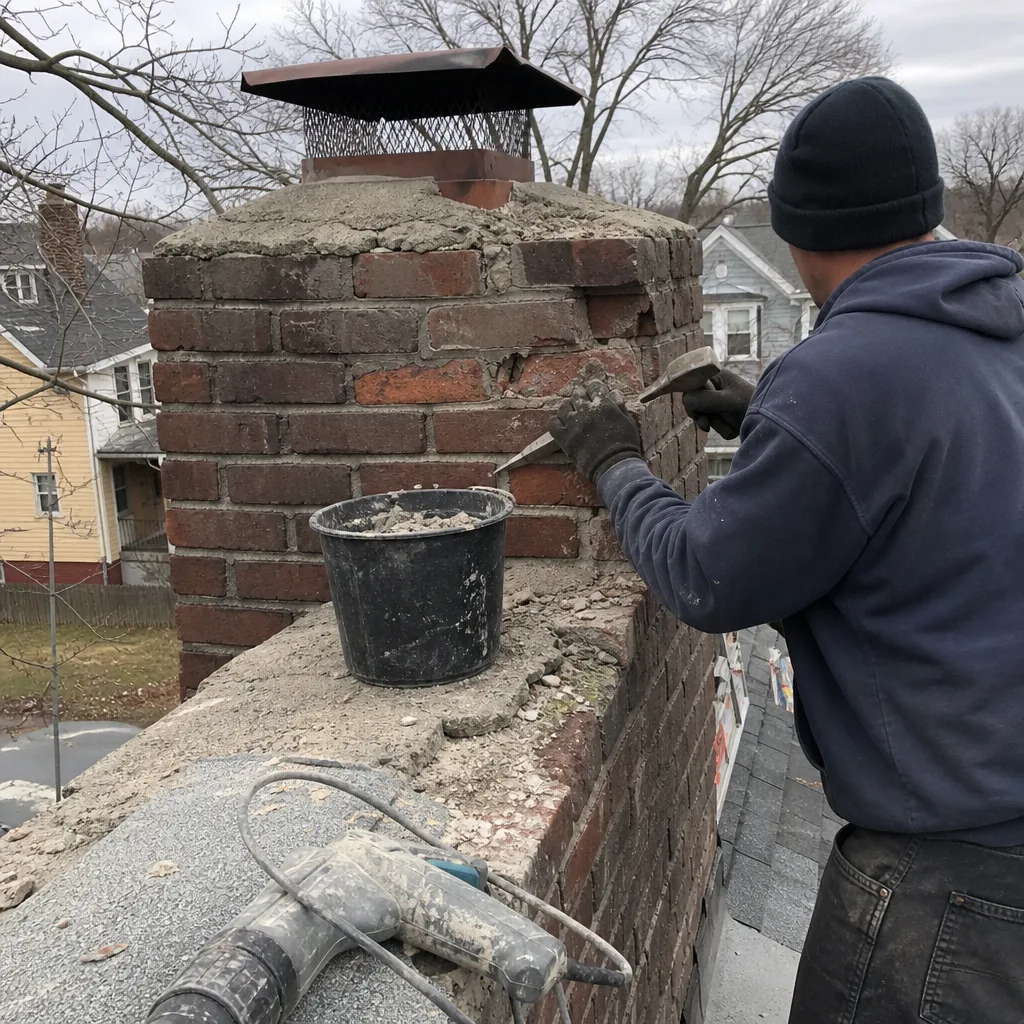 Before
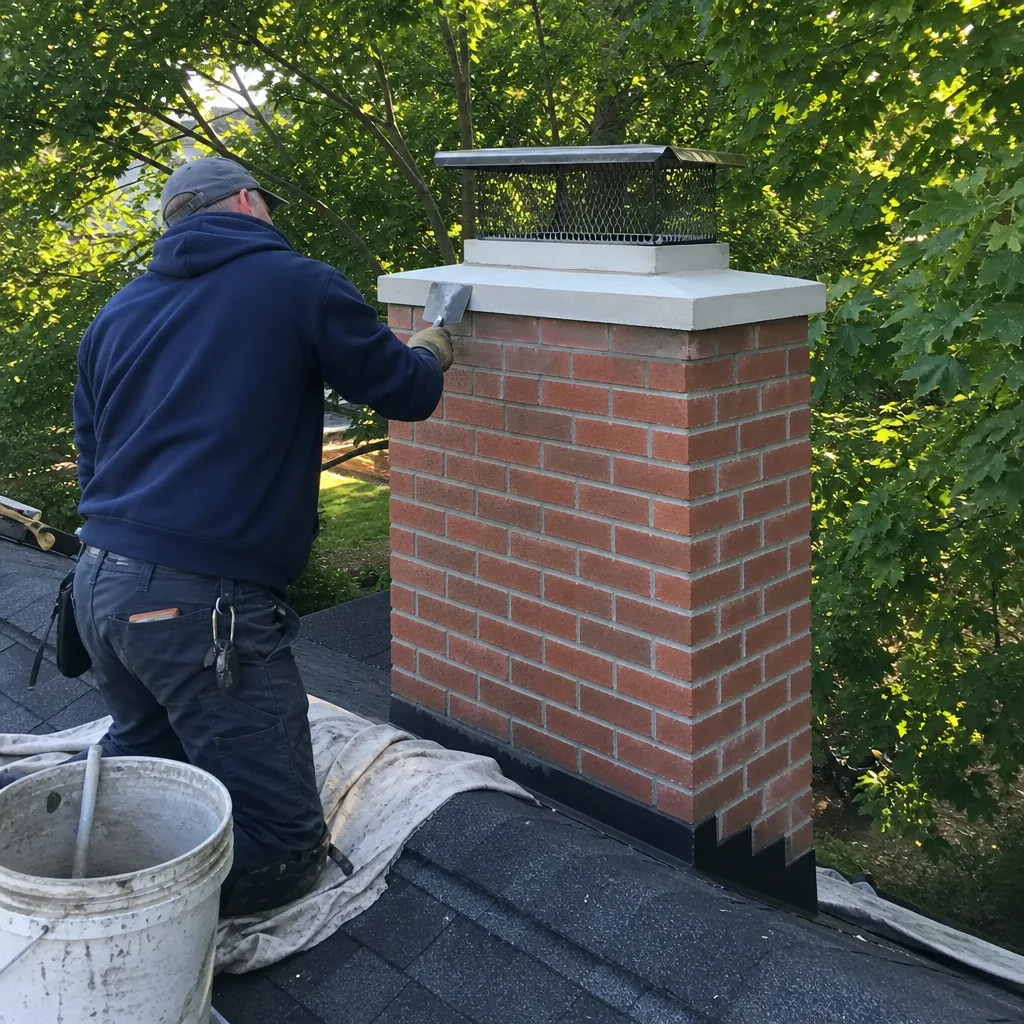 After
After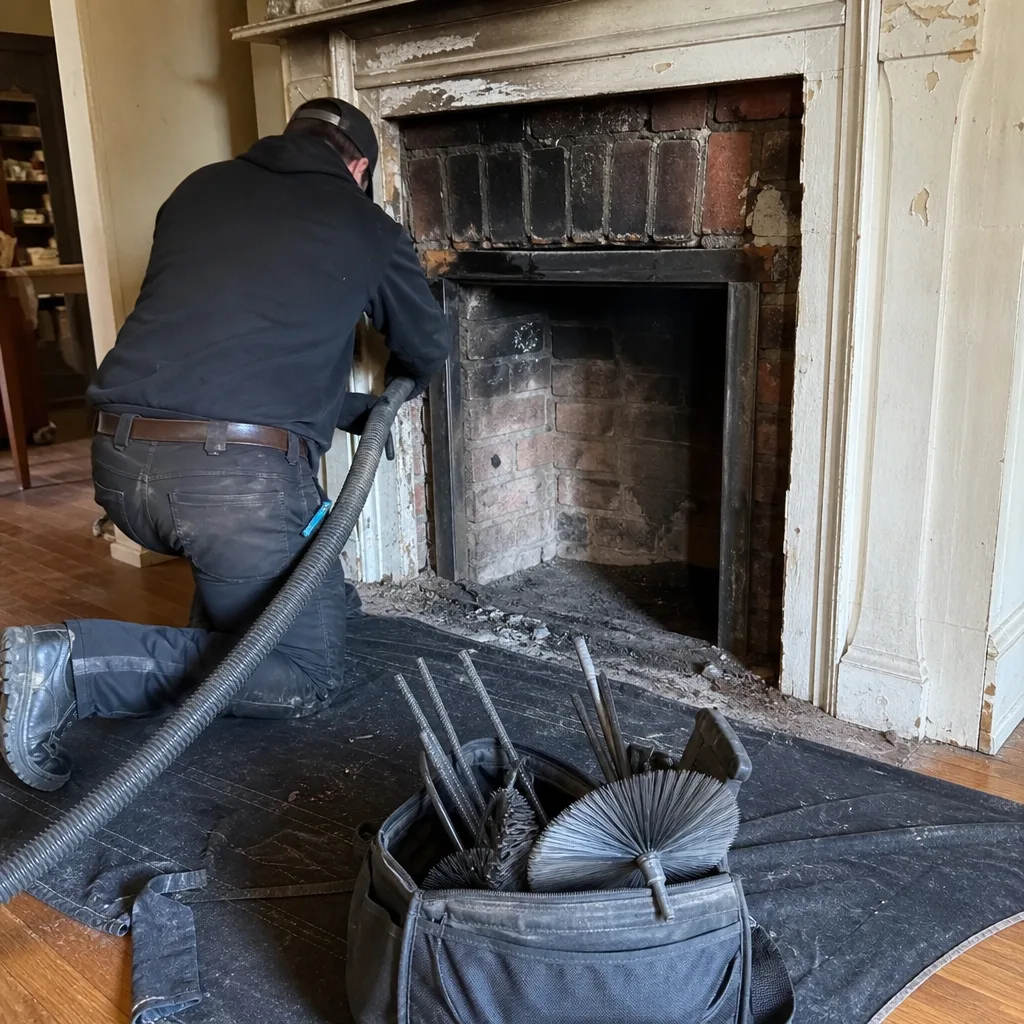 Before
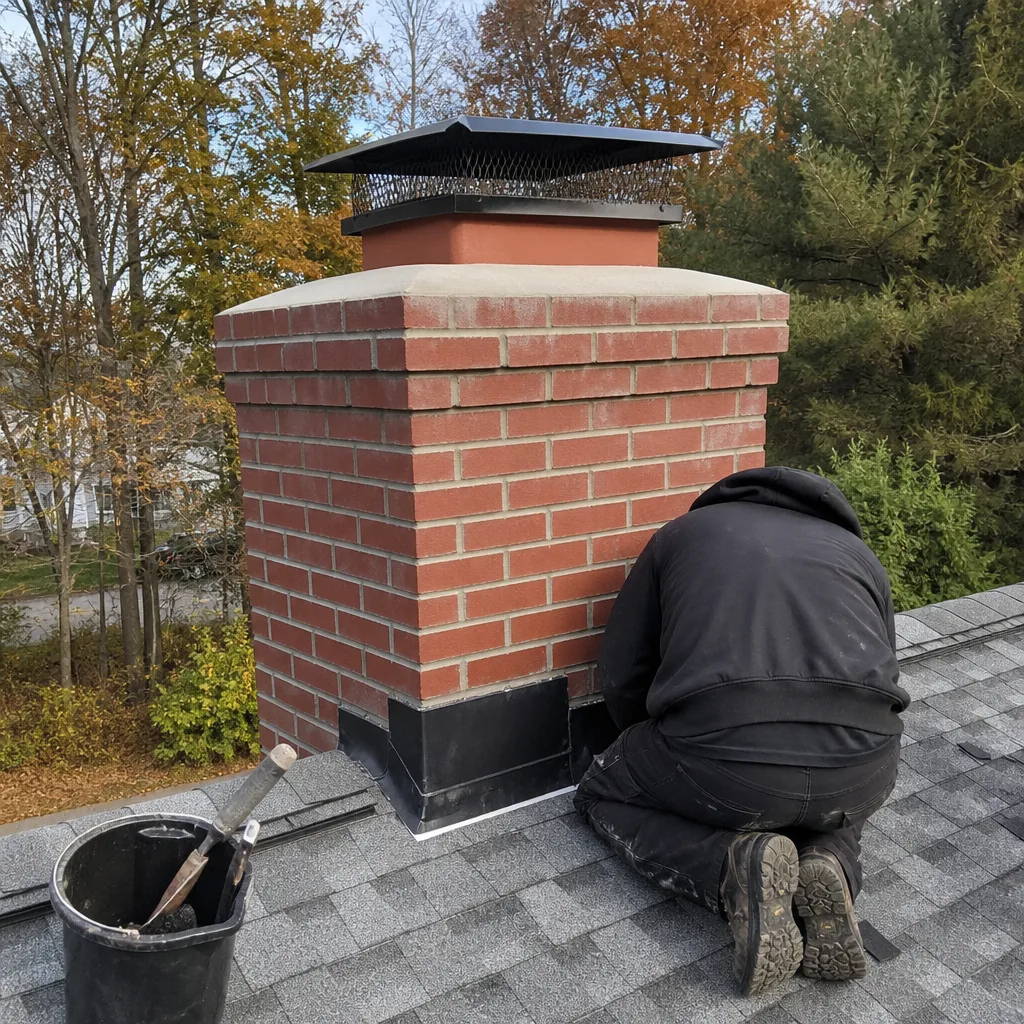 After
After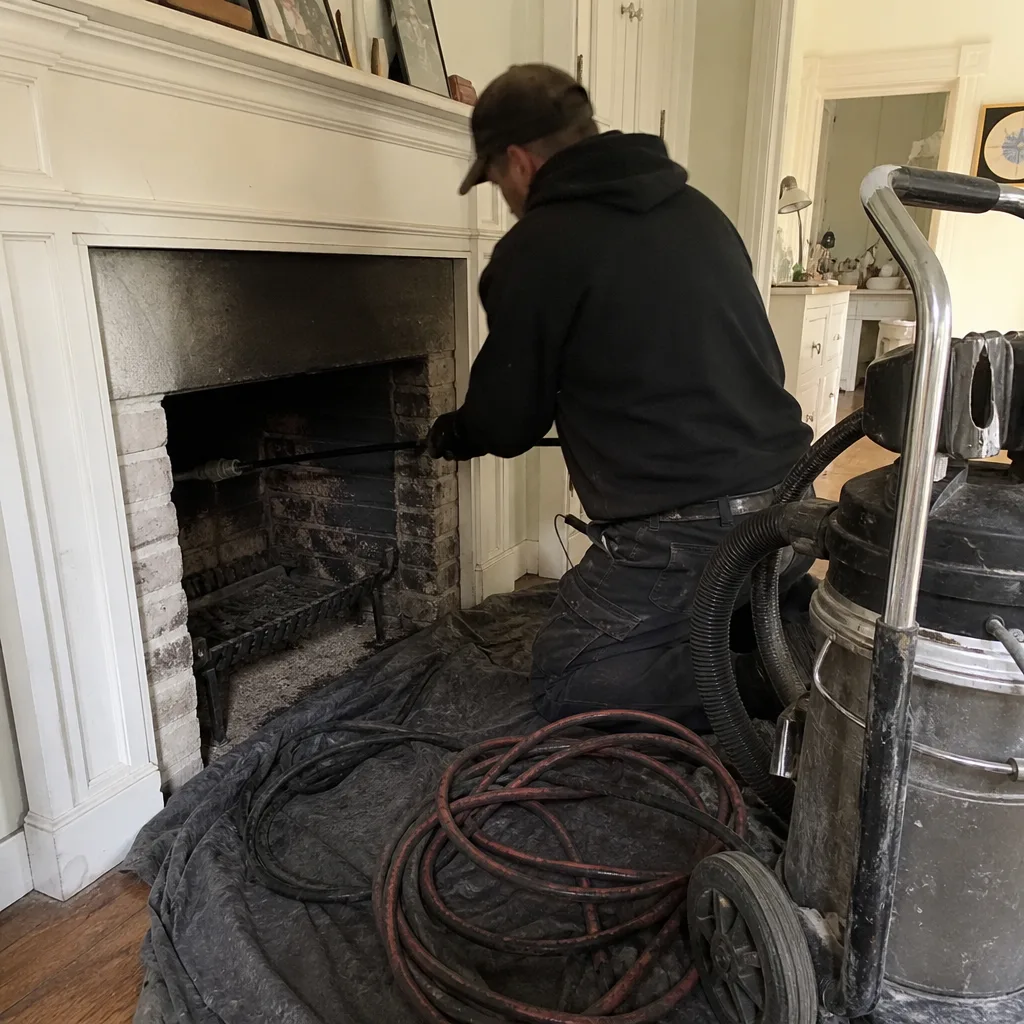 Before
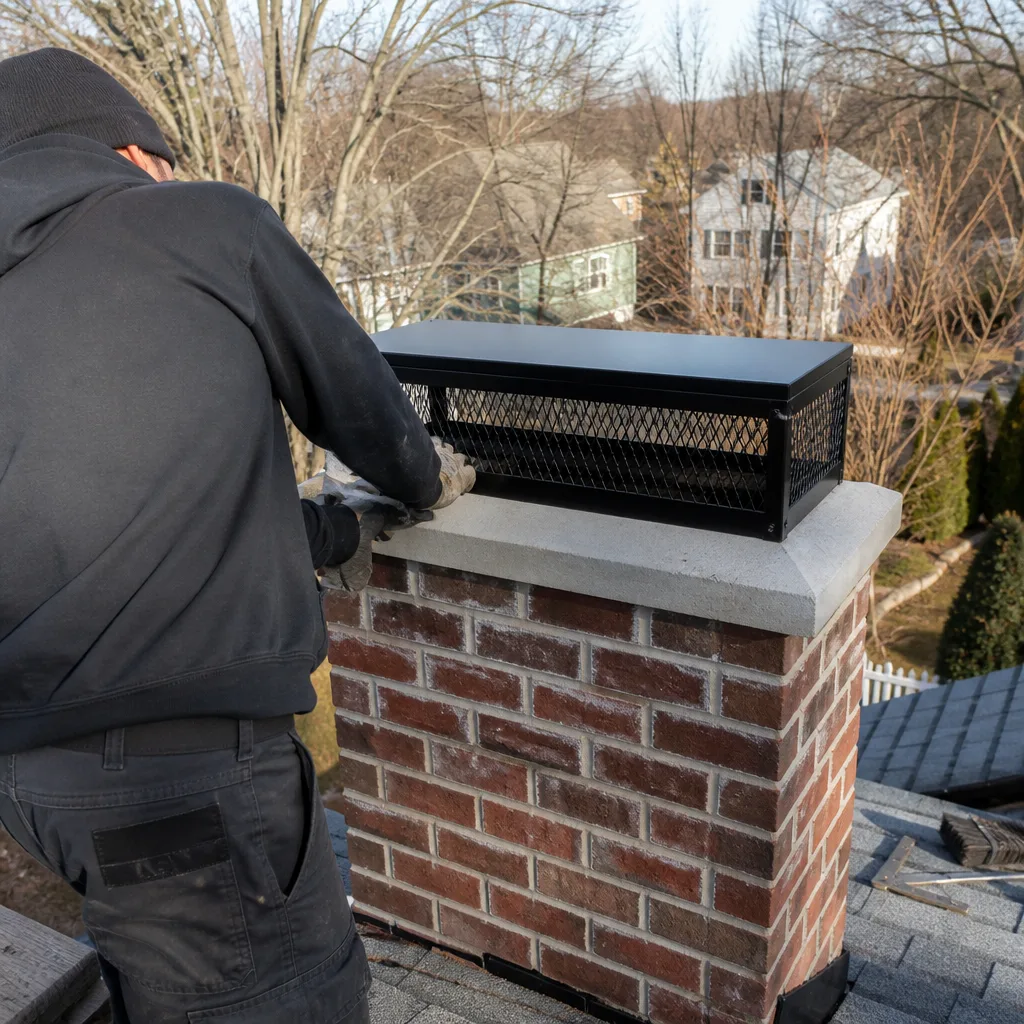 After
AfterThe Complete Guide to Chimney Cleaning in Norwood
Norwood averages about 48 inches of snow a year, and freeze-thaw cycles do more cumulative damage to a chimney than a full heating season of fires, yet almost every cleaning guide skips winter entirely. That’s the gap this guide closes. We’re going to walk through how a chimney actually ages in a New England climate, what you can check from the ground, what a sweep looks for on the roof, and when you can safely wait another season. If you own a home in Norwood, this is the plain-spoken version of what your chimney needs, and you can find seasonal chimney cleaning care for Norwood and more guides & resources in our other articles.
Quick Answer
Chimney cleaning in Norwood MA typically costs between $189 and $329 for a standard open-fireplace flue, with the final number depending on flue height, creosote stage, and whether animals have gotten in. A cleaning should be done once a year, even if you rarely burn, and a proper job includes a camera inspection so you can see the flue’s condition for yourself. Most jobs take 60 to 90 minutes from setup to final sweep-up.
Table of Contents
- How Norwood’s Climate Ages a Chimney
- How Often Should You Clean Your Chimney in Norwood?
- What a Chimney Cleaning Actually Includes
- Creosote Stages: What Each One Means for Your Flue
- Level 1 vs. Level 2 Inspections: What You Actually Need
- Why Older Norwood Homes Need Different Care
- How to Verify a Sweep’s Credentials Before Anyone Climbs Your Roof
- Reading Your Firebox After a Season of Use
- Common Mistakes to Avoid
- When to Call a Professional
- Frequently Asked Questions
- The Bottom Line
How Norwood’s Climate Ages a Chimney
Your flue doesn’t care how the fire looks. It cares how it breathes. And in Norwood, it breathes through some of the most punishing conditions in the Northeast. The town sits far enough inland to avoid the ocean’s moderating effect, which means real cold in January and genuine humidity in July. That combination is harder on masonry than either extreme alone.
Here’s what actually happens. Water gets into tiny cracks in the crown or mortar joints during a rainstorm. That night, the temperature drops below freezing. The water expands by roughly nine percent when it freezes, and that expansion is enough to widen a hairline crack into a visible gap. Repeat that 30 or 40 times over a single winter, and you have spalling brick, a shifting crown, or a flue liner that no longer lines anything. Most of the chimney damage we see in Norwood on an annual basis has nothing to do with fire. It has to do with ice.
Snow load matters too. Chimneys on older colonials and ranches around Washington Street and the neighborhoods off Nahatan Street often have flat or low-slope roof transitions that collect snow against the chase. When that snow melts and refreezes against the masonry, you get the same expansion cycle, concentrated right where the chimney meets the roof. That’s the most common leak point we find in this part of Norwood, and it’s usually invisible until the ceiling stain shows up in the upstairs bedroom.
For a deeper look at what our full cleaning service covers, see Chimney Cleaning & Sweep in Norwood.
How Often Should You Clean Your Chimney in Norwood?
Once a year, burn or no burn. Chimneys break in the off-season too.
The National Fire Protection Association, under NFPA 211, recommends that chimneys, fireplaces, and vents be inspected at least once a year and cleaned as needed. In Norwood, that recommendation isn’t a suggestion you can stretch. Here’s why.
Norwood’s housing stock skews older. A meaningful portion of homes in the neighborhoods around the town common and down toward Ellis Avenue were built before 1970, which means clay tile flue liners and masonry that has been absorbing New England weather for half a century or more. Clay tile liners crack. They crack from thermal stress, from settlement, from the same freeze-thaw cycle we described above. When they crack, creosote has a place to accumulate that a brush alone can’t remove. An annual inspection catches those cracks before they become a chimney fire or a carbon monoxide leak.
Even if you didn’t light a single fire last winter, the off-season brings animals, water intrusion, and masonry degradation. Raccoons and squirrels find uncapped chimneys in the spring. Their nesting material sits in the flue, blocking airflow and creating a fire hazard for the first cold night of the next season when you light up without thinking.
The simplest rule is this: book your cleaning in the late spring or summer, after burning season ends and before everyone in Norfolk County calls at once in September. You’ll get your choice of appointment times, and if repairs are needed, there’s plenty of season left to do them properly.
What a Chimney Cleaning Actually Includes
A proper chimney cleaning in Norwood should take about 60 to 90 minutes and should leave your home as clean as the sweep found it. If someone quotes 20 minutes, they’re not cleaning your chimney. They’re just running a brush up it.
Here’s the sequence a real job follows:
- Setup and floor protection. Drop cloths go down around the fireplace opening. The area gets sealed so dust stays out of the room. A high-quality job leaves your living room cleaner than it was before the sweep arrived.
- Initial inspection from the firebox. Wendell looks up the flue with a flashlight before touching anything. That first look tells him what creosote stage he’s dealing with, whether the damper is functional, and whether there’s visible damage that needs documentation.
- Mechanical brushing from the top. The flue gets brushed from the roof with a properly sized wire or poly brush. For clay tile liners, poly brushes are standard. Wire is used on stainless liners. The brush pulls creosote down into the firebox, not into your house.
- Firebox and smoke shelf cleaning. The accumulated debris gets vacuumed out of the firebox and smoke shelf area using a high-powered vacuum with a HEPA filter system. This is the part many budget cleanings skip.
- Camera inspection of the flue. A camera goes up the full length of the flue, top to bottom. The footage shows exactly what the inside of your chimney looks like: hairline cracks in clay tile, gaps in mortar joints, pitting in the liner, or a clean bill of health. You see the footage. The verdict comes in plain English, every time, no exceptions.
- Final report and recommendation. You get told what was found, what needs attention now, what can wait, and what doesn’t need doing at all. No recommendation without camera evidence you can see for yourself.
That last point matters more than most people realize. When a sweep tells you your liner is shot and you need a $4,000 relining job, you should be able to watch the video that proves it. If there’s no footage, there’s no proof. And if there’s no proof, get a second opinion. We do Chimney Repair in Norwood and we still tell people to get a second opinion when something doesn’t add up. A free second opinion on any written estimate is standing policy at Top Hat, whether it’s ours or someone else’s.
Creosote Stages: What Each One Means for Your Flue
Creosote isn’t one substance. It’s three distinct stages, and they require three different responses. Understanding the difference can save you real money and keep you from getting talked into work you don’t need.
First-Degree Creosote: Brush Job
First-degree creosote is a light, flaky, dark-brown deposit that brushes off the flue walls easily. It looks like coffee grounds stuck to a dry surface. It’s the normal byproduct of burning wood, and it forms in every chimney that sees regular use. A standard cleaning removes it completely. If this is all the sweep finds, you’re in good shape.
Second-Degree Creosote: The Warning Sign
Second-degree creosote appears as shiny, black flakes or hard, granular deposits. It’s harder to remove and means your fire is burning too cool or you’re burning wood that hasn’t been properly seasoned. At this stage, a standard brushing will still remove most of it, but the sweep should talk to you about burn habits: using smaller, hotter fires; checking that your wood has been split and stacked for at least six to twelve months; and being honest about whether you’re using the fireplace for relaxation or as supplemental heat.
Third-Degree Creosote: The Glazed Tar
Third-degree creosote is a dense, tarry glaze that resembles black glass. It doesn’t brush off. It requires chemical treatment, often a product like Gelco creosote remover applied by a professional, followed by a mechanical removal process. It’s also the stage at which chimney fires become a genuine, immediate risk, because this glaze is highly flammable and can burn at temperatures exceeding 2,000 degrees if ignited.
First-degree creosote is a brush job. Third-degree is a glaze, and by the time you reach it, catching up costs more than the years of skipped cleanings would have. Our advice is blunt: don’t let it get there.
Level 1 vs. Level 2 Inspections: What You Actually Need
Every conversation about chimney inspections eventually runs into NFPA 211’s three levels, and the confusion level is higher than it needs to be. Here’s the plain-English version.
A Level 1 inspection is what happens during a routine annual cleaning. The sweep examines the readily accessible portions of the chimney: the firebox, the damper, the flue interior, and the exterior from the ground or the roof. It’s included with any standard cleaning and it’s appropriate when you haven’t changed anything about your heating system or burning habits.
A Level 2 inspection is more involved. It includes everything in a Level 1 plus a camera scan of the entire flue, an examination of the attic and crawl space areas where the chimney passes through, and a closer look at the exterior masonry. NFPA 211 says a Level 2 is called for when a property is changing hands, when there’s been a chimney fire, when a new appliance is being connected to the flue, or after any significant weather event like a lightning strike or a tree fall.
The camera scan is the real distinction, and this is where the market in Norwood gets odd. Some companies quote a Level 2 as a premium add-on, as if the camera is optional. It isn’t. Without a camera scan, a sweep cannot see mid-flue cracks, damaged mortar joints between tile sections, or hidden animal nests. A cleaning without a camera inspection is half a job. At Top Hat, the camera footage and a plain-English verdict come with every single cleaning and every single inspection. There’s no upgrade fee to see the inside of your own chimney.
When do you actually need a Level 2? When you’re buying a house in Norwood. When you’ve had a chimney fire. When you’re switching from a wood-burning fireplace to a gas insert. When you haven’t used the chimney in years and you don’t know its history. For routine annual maintenance, a thorough Level 1 with camera documentation serves most Norwood homeowners perfectly well.
Why Older Norwood Homes Need Different Care
Norwood has a lot of pre-1970 housing stock, and those homes present a different set of chimney conditions than newer construction. Understanding the difference tells you what to expect, and what not to panic about.
The triple-deckers and older colonials around the center of Norwood were typically built with clay tile flue liners. These are ceramic tiles stacked inside the masonry chimney to contain heat and combustion gases. When the house was new, those tiles were a legitimate, code-compliant solution. Fifty or seventy years later, they’re a different story.
Clay tiles crack. The same freeze-thaw cycles that stress the exterior brick also stress the tiles, because any water that penetrates the chimney exterior reaches the tile flue eventually. Mortar joints between tiles deteriorate over time, and that creates gaps where creosote accumulates and hot gases escape. A clay tile flue in a Norwood colonial that’s been exposed to New England winters since the Kennedy administration needs to be inspected every year, without exception.
By contrast, stainless steel relining systems, like the ones we install from Olympia Chimney, are continuous, meaning there are no joints to fail. They’re designed to withstand the same conditions but with significantly less degradation over time. They also clean more easily, because the surface is smooth and creosote doesn’t grab onto it the same way it does on rough terra-cotta.
What does this mean for cleaning frequency? If you have original clay tile liners, annual cleaning and inspection is non-negotiable. If you have a stainless liner, the interval can stretch slightly, but we still recommend an annual look, because the liner is only one part of the system. The cap, crown, and mortar all still weather at the same rate, and the off-season still brings animals regardless of what your flue is made of.
If the camera finds cracks in older clay tile, the fix is often a product like HeatShield, a cerfractory sealant that can restore the flue without a full relining. It’s a furnace-cured ceramic material, not a paint, and in the right application it saves thousands compared to a full stainless liner. Not every cracked tile needs a HeatShield application, and not every flue qualifies for it. But it’s a repair option every older-home owner in Norwood should at least know exists before writing a check for a full reline.
If the damage is in the firebox or the visible masonry, that falls under our Fireplace Services in Norwood, and the same rule applies: camera first, recommendation second, no exceptions.
How to Verify a Sweep’s Credentials Before Anyone Climbs Your Roof
Letting a stranger onto your roof is an act of trust. The state of Massachusetts understands that, which is why chimney professionals here have specific registration and certification requirements you should verify before booking, as outlined in our How to Hire a Chimney Cleaning Contractor in Norwood: A Step-by-Step Guide.
Here’s the checklist:
- Check for CSIA certification. The Chimney Safety Institute of America is the industry’s main credentialing body. A CSIA-certified sweep has passed a technical exam covering codes, clearances, and inspection standards. You can verify a certification on the CSIA website. If a company claims certification but can’t produce a number, that’s a red flag.
- Check the MA Home Improvement Contractor registration. In Massachusetts, anyone performing home improvement work over $500 must be registered with the Office of Consumer Affairs and Business Regulation. You can verify this online at the state’s license check portal. An unregistered company doing chimney work in Norwood is operating outside state law.
- Ask for proof of insurance. A legitimate company carries general liability insurance and workers’ compensation. Workers’ comp matters for roof work specifically, because if the sweep falls off your roof and the company doesn’t carry comp, you could be looking at a claim against your homeowners insurance.
- Ask who’s coming. Wendell Pike’s name and license number are published on the Top Hat Chimney home page. The person who shows up at your door is the person whose name is on the work. That’s the local standard, and it’s worth asking any company you’re considering whether they meet it.
- Ask when the number gets finalized. If a company quotes one price on the phone and reserves the right to adjust it at the door, you’re being set up. Upfront pricing means the number you hear on the phone is the number on the invoice. If the company can’t say that, keep looking.
This isn’t bureaucracy. It’s the difference between someone with a truck and a brush, and someone with formal training, proper insurance, and legal accountability. In a town the size of Norwood, the latter is who you want on your roof.
Reading Your Firebox After a Season of Use
Between professional cleanings, you can learn a fair amount about your chimney’s condition by looking at the firebox. Here’s how to read what you see.
After a season of regular burning, take a flashlight and look at the interior walls of the firebox and the first visible section of the flue. The colors and textures you see tell the story.
Fine, light-brown or dark-brown powder that brushes away with a fingertip is first-degree creosote. This is normal at season’s end, and it’s exactly what your annual cleaning removes. No action needed beyond booking that cleaning.
Shiny, black, flaky deposits are second-degree creosote. They’re the signal that your fires have been burning too cool or your wood wasn’t seasoned. You should book a cleaning and also take a hard look at your wood supply. Wood that hasn’t been split and stacked for at least six months isn’t ready, and burning it builds creosote fast.
Dense, glossy, tar-like coating that looks like melted black plastic is third-degree creosote. This is the “clean now” signal. Do not build another fire until a professional has looked at it and removed it. Third-degree creosote is a chimney fire waiting on one hot fire.
Beyond creosote, look for white or gray staining on the firebox walls. That’s efflorescence, and it means water is getting into the masonry from somewhere, usually a failing crown or cap. The firebox is too far down to show freeze-thaw damage from the top, but if you see water staining there, the problem above is real.
Check the damper too. It should open and close with moderate resistance, and it should seat fully when closed. If it’s rusted solid, warped, or missing entirely, the chimney can’t be closed off when not in use, which means warm air escaping all winter and cold air dropping in all summer.
None of this replaces a professional camera inspection, but it gives you the vocabulary to understand what the sweep finds when the camera goes up.
Common Mistakes to Avoid
- Skipping the annual cleaning because you didn’t burn much. The off-season does the damage in Norwood: freeze-thaw cycles, nesting animals, and water intrusion don’t care whether you lit a fire. Once a year, burn or no burn.
- Trusting a phone quote that changes at the door. A sweep who won’t commit to a number before arriving is not a sweep you want on your roof. Get the number in writing before the tools come off the truck.
- Accepting a “cleaning” with no camera footage. Without a camera scan, the person on your roof cannot see mid-flue cracks or hidden mortar damage. If there’s no footage, there’s no inspection, and you’ve paid for half a job.
- Burning green or unseasoned wood. Wood that hasn’t been split and stacked for six to twelve months burns cool and wet, which is exactly how second and third-degree creosote form. In Norwood, wood needs to be cut by spring and burned the following winter.
- Ignoring a cracked or missing chimney cap. The cap is the first line of defense against rain, snow, and animals. A missing cap in Norwood means a raccoon or squirrel family by May, and a water-damaged flue by the following spring.
- Putting off a small repair because it’s “not that bad yet.” Spalling brick and cap cracks get worse every winter. The repair bill compounds every freeze-thaw cycle. What costs $400 in June can cost $2,500 by the following March.
- Hiring on price alone. A chimney cleaning in Norwood has a floor. If a company is quoting significantly below the market, they’re skipping something: the camera scan, the smoke shelf, the floor protection, or the insurance. You find out which one after they leave.
When to Call a Professional
Some chimney conditions are worth watching, and some require a call this week. You should call a professional when you see shiny black glazing in your firebox, when you smell smoke or musty odors coming from the fireplace when it isn’t lit, when you see white staining or falling mortar on the exterior chimney, when your damper won’t open or close, or when you’ve just bought a home in Norwood and have no documentation of the chimney’s service history.
You should also call if a previous sweep gave you a verdict with no camera footage, or if a quoted repair number feels high and you want a second set of eyes. For more guides & resources on chimney maintenance, explore our blog. Top Hat Chimney offers free estimates in Norwood, no trip charge inside the county, and a free second opinion on any written estimate from any company. Call (508) 687-5884 and you’ll talk to a live person, not a call center.
Frequently Asked Questions
A standard chimney cleaning in Norwood MA runs between $189 and $329 for a typical open fireplace flue, with the price determined by flue height, creosote stage, roof accessibility, and whether animals have nested. The number you hear on the phone should be the number on the invoice. Call (508) 687-5884 and we’ll give you that number before a single tool comes off the truck.
Not every cracked flue needs a full reline, and not every old clay tile liner is at the end of its life. In many older Norwood homes, products like HeatShield can restore the flue without replacement, at a fraction of the cost. The deciding factor is camera footage: if a sweep recommends a full reline without showing you the video, get a second opinion. We’ll show you the camera footage and a plain-English verdict, every time, no exceptions.
Once a year, whether you burn or not. That’s the NFPA 211 recommendation and it’s the right interval for Norwood’s climate and older housing stock. If you burn three or more cords a year, or regularly burn softwood, you may need a mid-season sweep as well.
In the best case, nothing visible, but creosote is building up where you can’t see it. In the worst case, a chimney fire or a carbon monoxide leak. What’s more likely in Norwood is that your crown or cap fails and water gets into the flue, turning a $250 cleaning into a $2,000 repair. Skipping a year doesn’t save money; it compounds risk.
You can, and plenty of Norwood homeowners do, but we don’t recommend it. The roof access on most Norwood homes is steeper than people expect, and a fall from a roof is a life-changing injury, not a bad afternoon. A DIY brush job also won’t include a camera inspection, so you’ll remove the creosote without learning about the crack behind it. For a flat fee you get professional removal, a camera scan, and documentation. Call (508) 687-5884 for an exact quote, and we’ll tell you if it’s even worth doing this year.
A cleaning removes creosote and debris from the flue. An inspection assesses the condition of the chimney system. A proper cleaning always includes a basic Level 1 inspection, and our cleanings also include full camera documentation of the flue at no additional charge. A Level 2 inspection is more comprehensive and is called for when buying a home, after a chimney fire, or when changing the type of appliance connected to the flue.
The Bottom Line
Norwood chimneys fail from weather more than from fire, and the best defense is an annual look from someone who knows what to look for. The cleaning matters, but the camera inspection matters more, because it’s the only way to see a crack before it becomes a chimney fire or a carbon monoxide leak. If you have an older home with original clay tile liners, this isn’t optional. Once a year, burn or no burn. Ask anyone on your street. And if you want a straight answer about what your chimney needs, call (508) 687-5884 and we’ll give it to you.
Written by Wendell Pike, Owner at Top Hat Chimney, serving Norwood since 1999.